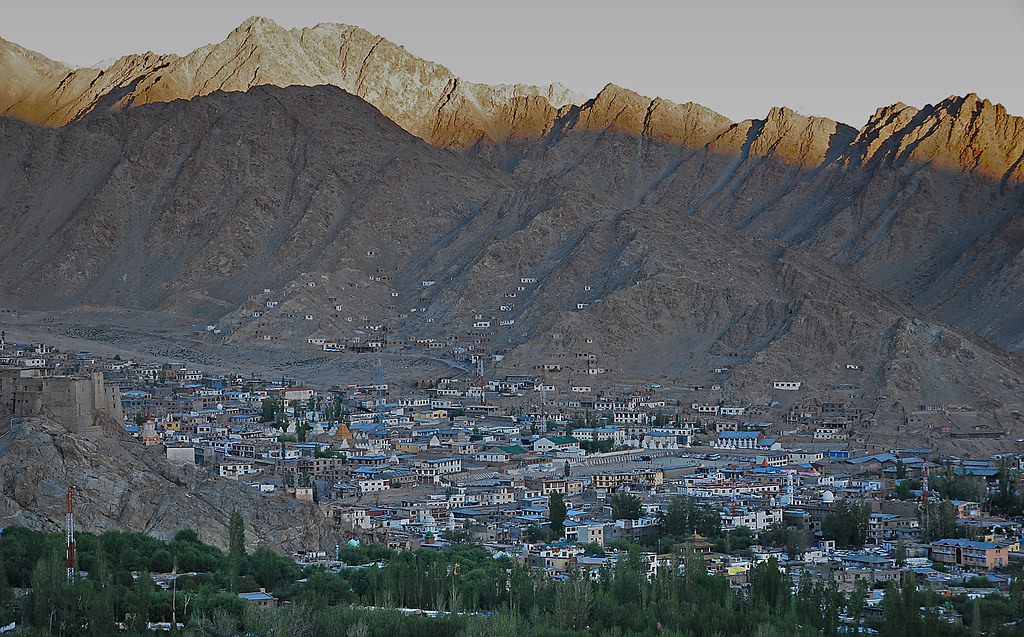
Ladakh in August is a proper travel month, not a month to avoid simply because the rest of India is dealing with monsoon. The main tourist season is active, the high-altitude lakes and valleys are in their summer travel window, and Ladakh Tourism lists May to September as its summer period for lake trips, trekking and biking.
The catch is the approach.
Rain and landslides are more relevant on parts of the Srinagar–Leh and Manali–Leh routes than they are in Leh itself.
If you are searching for Ladakh in August weather, wondering whether Ladakh is open in August, or planning a Ladakh trip in August 2026, this guide covers the part that generic travel articles usually skip: how the weather actually affects your route, where to go, what to pack, and how much buffer you should leave.
Is August a good time to visit Ladakh?
Yes, especially if your main interests are road trips, high-altitude lakes, monasteries, trekking, photography and biking.
Ladakh Tourism currently places May to September in its summer travel period and specifically lists lake excursions, trekking and biking during that period.
August also has something that surprises first-time visitors.
You may be travelling to a dry, high-altitude region while the rest of northern India is dealing with monsoon downpours.
Ladakh sits in a rain-shadow region. The Great Himalayan Range acts as an immense physical barrier that blocks monsoon cloud systems pushing up from the Indian Ocean and the Bay of Bengal. The District Leh administration describes the climate across Ladakh as mainly dry with little or no rainfall, while Ladakh Police warns that sudden localized rain showers or flash runoff can still disrupt travel.
So don't make the mistake of checking the weather forecast for Delhi, Chandigarh or Manali and assuming it represents Leh. It doesn't.
What is Ladakh weather like in August?
The simplest way to understand Ladakh in August weather is this:
Sunny, dry-feeling conditions in Leh can exist at the same time as torrential monsoon downpours on a mountain road several hundred kilometres away in Himachal or Kashmir.
The District Leh administration says summer temperatures in Ladakh rarely exceed 30°C and gives an average summer night minimum around 12°C in its general climate description. The same administration advises summer visitors to carry warm clothing for mornings and evenings and says temperatures begin falling during the second half of August.
According to climatological data from the India Meteorological Department (IMD) for Leh, August features mean daily highs of 25.5°C to 27.8°C, night averages around 11.8°C, and total monthly precipitation averaging around 15.4 mm.
That last point matters.
August does not stay identical from the 1st to the 31st.
Early August (Aug 1 – 15)
The first part of August is firmly within peak summer. Daytime sunshine can feel hot in direct sun—often crossing 28°C in Leh and Kargil. T-shirts are comfortable by noon, but afternoon glacial stream runoffs reach their peak seasonal volume.
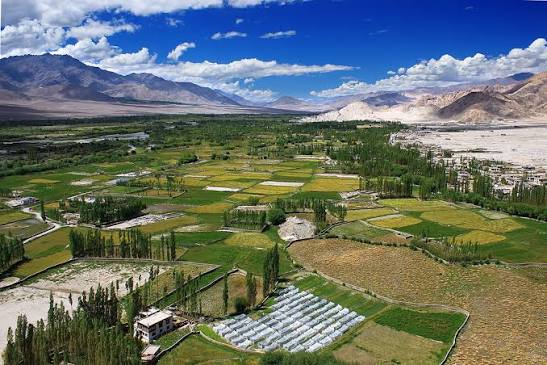
- Lush green Indus & Suru valley farmlands
- Warmest lake water temperatures of the year
- Glacial nallahs swell heavily after 1:00 PM
- Heavier monsoon rains in foothills (Manali/Jammu)
Late August (Aug 16 – 31)
Temperatures begin their subtle transition toward autumn. Nights at high passes and lakes become crisper. Glacial melt slowly moderates, making water crossings slightly easier, while barley crops begin turning pale golden.
- Evening chills return quickly after sunset
- Foothill monsoon rains begin to taper off
- Pangong Lake nights drop below 6°C
- Prime window for high-altitude trekking circuits
What are the road conditions like in August?
All major highways into Ladakh—the Srinagar–Leh Highway (NH-1) and the Manali–Leh Highway (NH-3)—as well as internal passes like Khardung La, Chang La, and Pensi La, are open in August.
However, travelling to Ladakh by road in August is defined by two unique physical phenomena that every driver and rider must understand: foothill monsoon landslides and high-altitude glacial melt crossings (nallahs).
| Highway Route | August Operating Status | Key Challenges to Watch |
|---|---|---|
| Srinagar–Leh Highway (NH-1) | Fully Open | Monsoon rain & mud between Sonamarg and Baltal; clear past Zoji La into Drass. |
| Manali–Leh Highway (NH-3) | Fully Open | Heavy monsoon rains in Kullu/Manali; afternoon glacial nallahs between Darcha & Pang. |
| Khardung La (to Nubra Valley) | Fully Open | Clear paved tarmac; occasional afternoon mud melt near North Pullu. |
| Chang La (to Pangong Lake) | Fully Open | Generally dry; high wind and cold pass summit. |
| Kargil–Zanskar Highway (NH-301) | Fully Open | Spectacular Suru Valley scenery; Pensi La is snow-free with active glacier views. |
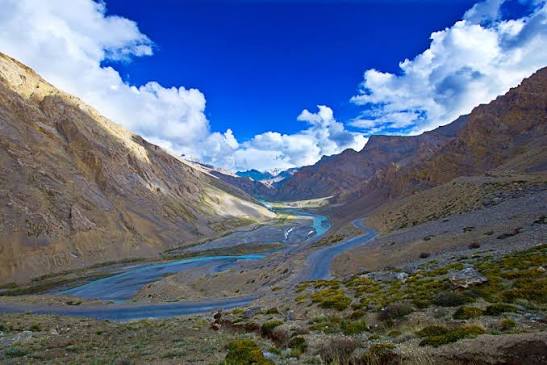
The "Glacial Melt Rule" for water crossings (Nallahs)
First-time Himalayan road trippers are often surprised to find dry, sunny weather accompanied by roaring, wheel-deep water crossings on the road.
This is not caused by rain. It is caused by sunlight melting the snow and ice fields above the road.
- Morning (6:00 AM – 10:30 AM): The overnight freezing temperatures hold back the glacial melt. Nallahs like Pagal Nallah, Zingzingbar, and Kangla Jal have shallow, clear, low-volume streams. Cars and motorcycles pass with ease.
- Afternoon (1:00 PM – 5:30 PM): Hours of intense, direct high-altitude solar radiation melt massive volumes of snowpack. The streams swell into fast-flowing, muddy torrents carrying loose rocks. Motorcycles can stall, and small hatchbacks risk scraping undercarriages.
The Golden Rule for August Road Trips: Always cross your highest passes and major water crossings before noon. Start your driving days by 6:00 AM.
Should you visit Ladakh by flight or road in August?
Because of the monsoon conditions in northern India's lower hills, choosing between flying and driving requires honest evaluation of your schedule:
✈️ Fly to Leh if:
- You have a tight holiday window (6 to 8 days).
- You want to completely bypass monsoon landslides in Himachal/Kashmir.
- You are travelling with elderly family members or young children.
- You prioritize guaranteed travel dates without road blockage delays.
🚗 Choose the road approach if:
- The overland drive is the main dream of your trip.
- You have 10 to 14 days and can afford a 1-day landslide buffer.
- You take the Srinagar–Kargil–Leh route for gentler, safer altitude gain.
- You want to explore Drass, Kargil, and Suru Valley on the way.
Best things to do & places to visit in August
August is the heart of summer in Ladakh. Every remote valley is accessible, tourist infrastructure is operating at 100%, and the barren landscapes are dotted with vibrant green oases.
1. See Pangong Lake at its most radiant
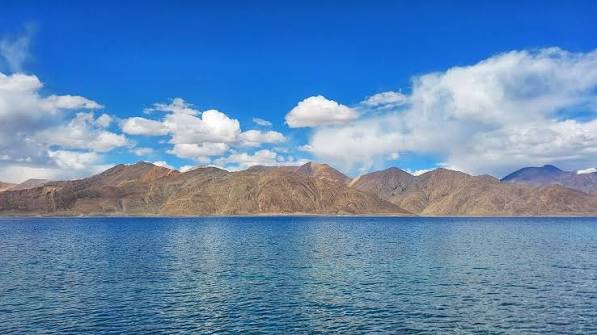
Pangong Lake is at its absolute visual best in August. The intense summer sunlight brings out shifting shades of cobalt, sapphire, and turquoise.
All lakeside campsites in Spangmik, Lukung, and Tangtse are open, with running water and kitchen setups running at full capacity. While nights are chilly (around 3°C to 6°C), they are nowhere near as brutal as October or May.
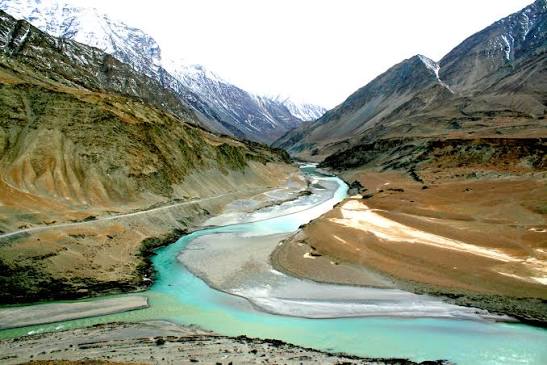
2. Witness the Sangam (Indus & Zanskar Confluence)
Located just 30 km west of Leh along the Srinagar highway, the confluence of the Indus and Zanskar rivers is one of Ladakh's most striking geological marvels.
In August, the two rivers display dramatic contrast: the Indus flows in a sparkling emerald-green or turquoise shade, while the Zanskar rushes with muddy, silt-laden glacial melt before merging into a singular mighty gorge. It is also the peak season for white-water river rafting (Grade III/IV rapids on the Zanskar).
3. Explore Nubra Valley & blooming Karakoram flowers
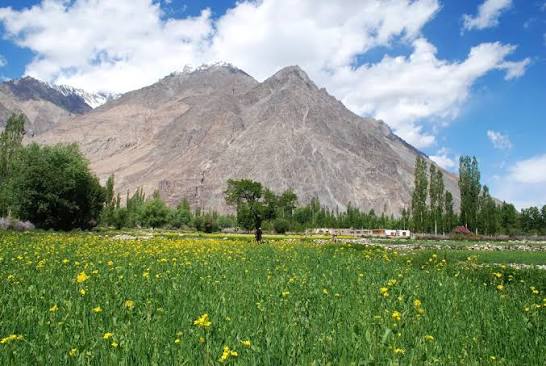
Crossing Khardung La (5,359 m) brings you into Nubra Valley, where August transforms the riverbeds into lush gardens. In villages like Hunder, Diskit, Sumur, and Turtuk, fields of yellow mustard flowers and wild buckwheat bloom against the dramatic grey Karakoram ridges.
Take an evening walk along the Hunder sand dunes with the double-humped Bactrian camels, and taste fresh local apricots ripening on village orchard trees.
4. Cross Khardung La & Chang La at peak reliability
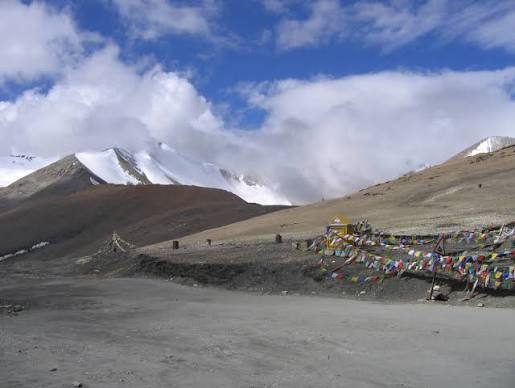
Unlike the shoulder seasons (May or October) when heavy snow can block high passes for days, Khardung La and Chang La operate with exceptional reliability in August. Road surfaces are largely free of black ice during daylight hours, making it the safest time of the year for panoramic pass crossings.
5. Discover Suru Valley & Zanskar's green season
If you want to escape the crowded tourist circuits of Leh, Suru Valley in Kargil district is National Geographic's celebrated hidden gem.
In August, Suru's alpine meadows (Sankoo, Panikhar, Parkachik) are carpeted in lush green grass, fed by melting streams from the colossal 7,000-metre twin massifs of Mount Nun and Mount Kun. Continuing across Pensi La leads you into Zanskar Valley, where ancient monasteries like Karsha and Phugtal are fully accessible.
What August Actually Feels Like on the Ground
"Every August, I get dozens of anxious messages from travelers asking: 'Is Ladakh flooded? We saw news of rain in Himachal.' Here in Kargil and Leh, we look up at clear blue skies and smile. The Great Himalayan mountain wall protects us from the monsoon downpours that drench Delhi or Manali."
"August in Kargil is apricot harvest season. The trees across Suru Valley and Batalik are heavy with golden Halman apricots, drying on every flat rooftop. The air smells sweet, afternoon breezes along the Suru river are refreshing, and evenings are comfortably mild. The only place you must stay vigilant is morning water crossings if you are driving overland from Manali. Once you are past the high passes and into Ladakh territory, August is pure mountain magic."
What should you pack for Ladakh in August?
Packing for August is about managing high thermal variation between direct sunlight and nighttime elevation:
- Daytime Clothes: Breathable cotton t-shirts, light full-sleeve linen shirts, and comfortable hiking cargo pants. Sun exposure is strong, so full sleeves protect against sunburn.
- Evening Layers: A fleece jacket, softshell windcheater, or light woollen pullover for Leh town dinners and evening walks.
- High-Altitude Warmth: A light down jacket and one pair of thermal inners strictly for overnight lake stays (Pangong or Tso Moriri) and early morning pass crossings.
- Road Approach Waterproofs: A compact waterproof rain jacket or poncho. While Ladakh itself is dry, you will likely encounter rain if driving through Kashmir or Himachal foothills.
- Sun & Skin Defense: High-SPF sunscreen (SPF 50+), UV400 polarized sunglasses (essential on glaring lake surfaces), and moisturizing lip balm.
- Footwear: Sturdy walking shoes or broken-in trekking boots with good grip. For bikers, waterproof riding boots are non-negotiable.
Altitude sickness & acclimatization in August
Warm sunny weather does not prevent Acute Mountain Sickness (AMS).
Leh sits at 3,524 metres (11,562 feet), where atmospheric pressure is approximately 35% lower than at sea level. The Ladakh Tourism administration strictly requires that all visitors arriving by air in Leh must observe a mandatory 48-hour rest and acclimatization period before heading to higher areas like Khardung La (5,359 m) or Pangong Lake (4,250 m).
Do not rush to Khardung La on Day 2. Spend your first 48 hours resting, drinking 3–4 litres of water daily, eating light meals, and walking gently through Leh market. This simple patience guarantees a trouble-free holiday.
A practical 7-day Ladakh itinerary for August (Flight-Based)
Designed for travelers flying into Leh to maximize comfort, sights, and safety:
Fly into Leh (3,524 m) & Acclimatize
Land at Kushok Bakula Rimpochee Airport (IXL). Check into your hotel, sleep, hydrate, and relax. No strenuous walking or city touring.
Leh Local Sightseeing & Monasteries
Visit Shey Palace, Thiksey Gompa, and Leh Palace in the afternoon sun. Sunset view from Shanti Stupa. Complete your 48-hour acclimatization.
Leh to Nubra Valley via Khardung La (5,359 m)
Cross Khardung La mid-morning. Descend into Nubra Valley, explore Diskit Monastery and its giant Maitreya Buddha statue. Overnight in Hunder.
Nubra Valley (Hunder & Turtuk)
Ride the double-humped camels on Hunder sand dunes in the morning. Take a scenic day drive to Turtuk, the northernmost Balti village famous for apricot groves.
Nubra to Pangong Lake via Shyok Route
Drive along the scenic Shyok river gorge (start by 7:30 AM to cross minor stream beds early). Arrive at Pangong Lake (4,250 m) for stunning sunset lake reflections. Overnight at Spangmik camp.
Pangong Lake to Leh via Chang La (5,360 m)
Sunrise lake photography. Cross Chang La before noon and stop by Hemis Monastery on the return to Leh. Evening shopping in Leh bazaar.
Departure from Leh
Morning transfer to Leh airport for your flight back home, carrying memories of clear blue skies and golden Karakoram mountains.
What about a Ladakh bike trip in August?
August is one of the most popular months for motorcycle tours on Royal Enfields and Himalayan adventure bikes. All mountain passes are open and snow-free.
However, riders must adhere to these three rules:
- Waterproof Everything: Pack your clothes inside heavy-duty waterproof dry bags. Normal backpacks will get soaked during water crossings and foothill rain.
- Cross Nallahs in the Morning: When riding between Jispa, Sarchu, and Leh, cross major glacial runoff streams before 11:00 AM. In the afternoon, water levels rise significantly and can submerge exhausts.
- Carry Spare Spark Plugs & Clutch Cables: Water splashing on hot engine cases can cause electrical cutoffs. Ride steadily through water without revving aggressively.
Ladakh in August: Quick Travel Dashboard
Key operational facts, rain-shadow baselines, and summer conditions at a glance
Pangong & High Lakes: 15°C to 18°C daytime / 3°C to 6°C crisp nights.
Traveler Questions & Ground Updates