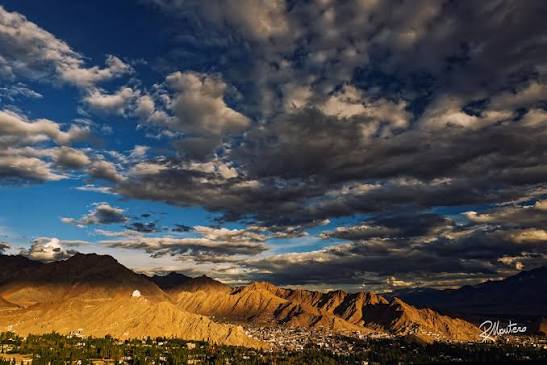
Ladakh in October is still very much possible, but you need to plan it as the start of winter rather than the end of summer. Early October is the easier part of the month for a road-and-sightseeing trip; later in October, cold, snowfall, temporary road disruption and the loss of seasonal services become much more important planning factors.
That doesn't make October a bad month.
It makes it a very different trip.
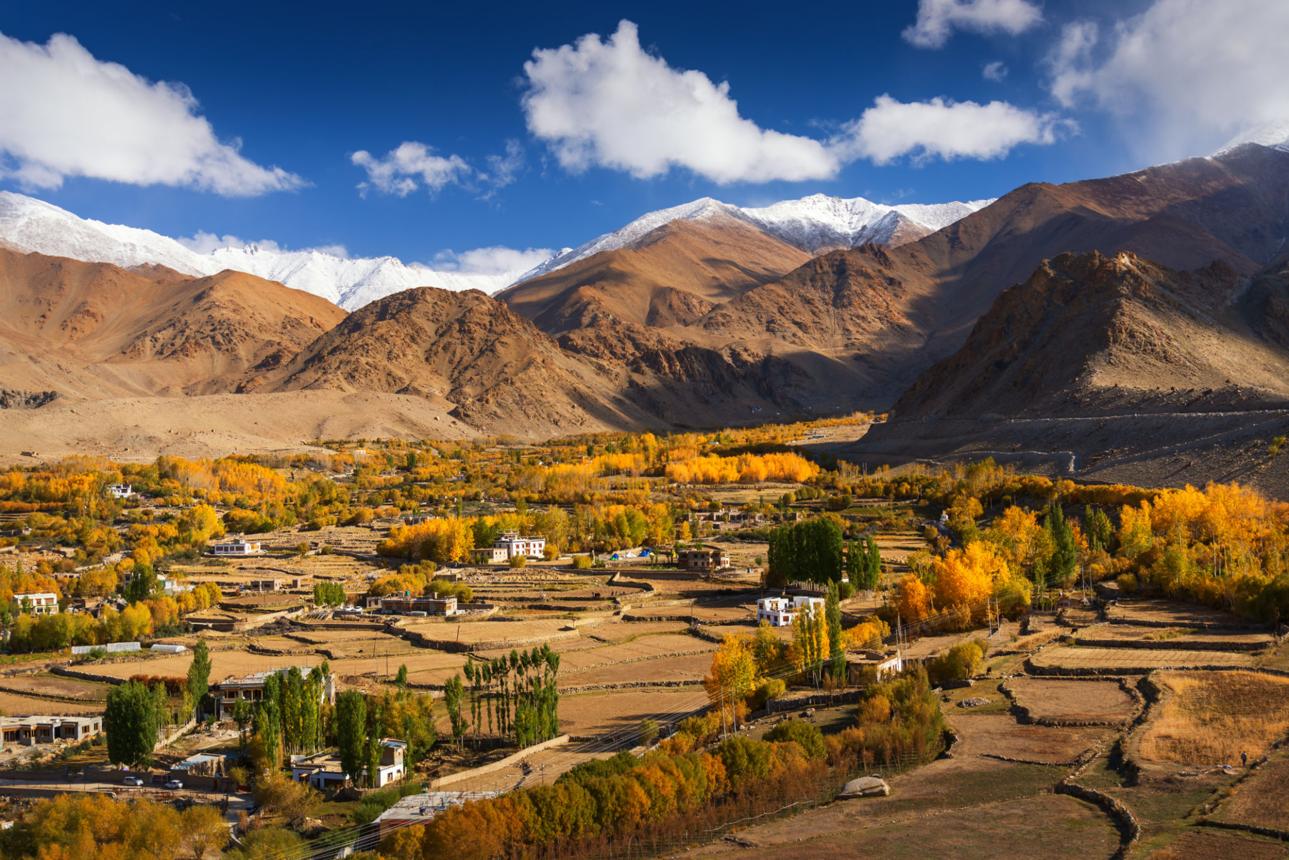
Leh itself remains accessible, the high-altitude scenery is still there, and official Ladakh Tourism classifies September–October as the autumn season, highlighting golden landscapes, clear skies and photography. But October sits right on the edge of the seasonal road and accommodation cycle, so your exact dates matter far more than they do in July or August.
Is Ladakh open in October?
Yes. Ladakh does not simply “shut” on October 1.
Leh remains a functioning town and is accessible by air, while the major road approaches have published seasonal windows rather than a single October closure date. The District Leh administration lists the Srinagar–Leh Highway as normally open from May to November/December and the Manali–Leh Highway from May/June to September/October.
The distinction matters.
A traveller flying into Leh in early October is solving a different logistics problem from someone planning a motorcycle journey from Manali in the second half of October.
And someone travelling from Srinagar through Kargil needs to think about Zoji La, traffic restrictions and current weather rather than relying on a blog post written several months earlier.
Ladakh Tourism itself tells visitors to use its advisory system for current travel alerts, road conditions and weather.
So the useful answer to “Is Ladakh open in October?” is: Yes—but October is a month for checking your route, not assuming it.
What is the weather like in Ladakh in October?
If you've seen travel pages quoting wildly different October temperatures for Ladakh, there is a reason.
“Ladakh” is enormous, and Leh's weather is not Pangong's weather.
The best hard baseline I found is from the India Meteorological Department's (IMD) Leh climatology for 2011–2024. For October, Leh has a mean daily minimum of 0.7°C, a mean daily maximum of 16.4°C, average total rainfall of 2.7 mm, and an average of 1.1 rainy days in the month.
Those are useful numbers. They are also easy to misuse.
They describe Leh's climatological average, not the exact temperature you will experience at Pangong Lake, Tso Moriri, a high pass or a remote valley overnight.
That difference is the first thing I would put in a September/October Ladakh packing plan.
October in Leh
During the day, sunshine can make Leh feel much more comfortable than the thermometer suggests.
After sunset, that changes quickly.
The official Ladakh Tourism advisory now tells travellers that winter conditions between October and March require adequate cold-weather clothing, thermal wear and emergency supplies, and notes that winter temperatures in Ladakh can fall as low as −30°C. That figure is a regional winter warning, not an October forecast for Leh.
So don't pack for “16°C.” Pack for a day that might be pleasant in direct sun and a night that feels properly wintry.
Early October and late October are not the same trip
This is the section I wish more Ladakh guides made clearer.
Early October (Oct 1 – 12)
For many first-time travellers, the first part of October is the easier planning window. You're still travelling within the published seasonal road windows, and you are earlier in the transition toward winter. Tourist infrastructure is also more likely to be operating normally.
- Best for a first Ladakh trip
- Mixed sightseeing & autumn photography
- Srinagar–Kargil–Leh road journeys
- Flight-based Leh trips with Nubra & Pangong
Late October (Oct 20 – 31)
This is where I would stop promising travellers a standard summer circuit. Leh town is still a functional base, but remote areas demand caution. Seasonal campsites pack up, restaurants shorten hours, and passes see sudden weather closures.
- Requires flexible buffers & heated rooms
- High-pass morning ice is common
- Overland routes via Manali become volatile
- Travelers must prepare for sub-zero lake nights
Mid-October: Now you start needing a more flexible mindset. High-pass weather matters more. Overnight temperatures become a bigger concern. Remote accommodation needs more advance checking, and a route that looked straightforward on paper should be rechecked close to departure. There is no useful universal “mid-October closure date” I can give you.
The mistake is not travelling in late October. The mistake is booking late October as though it were late August.
Will there be snow in Ladakh in October?
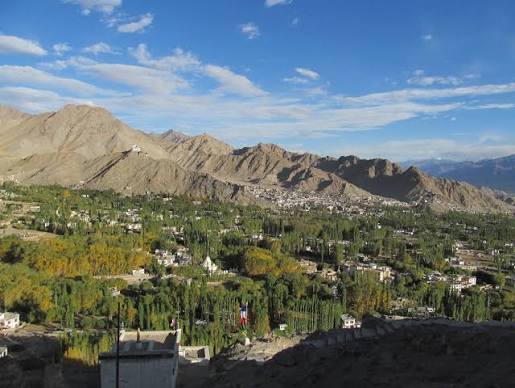
Snow becomes a real possibility in October, especially at higher elevations, but nobody should promise you a fixed amount of snowfall for a particular date.
Ladakh Tourism's own autumn/winter guidance reflects the seasonal change, and Condé Nast Traveller's Ladakh climate overview notes that snowfall typically begins in October as winter sets in, while high-altitude passes can receive intermittent snow at other times too.
This is why a sunny Leh forecast does not automatically mean your road journey will be trouble-free.
Your destination could be clear. The pass between you and the destination could have received snow. That's the part people miss.
For an October trip, look at the weather along the route, not only in Leh.
What are the road conditions like in October?
Here's the answer I'd want before spending money on a trip:
Some major roads are still within their normal seasonal window, but October is too changeable for a “the road will definitely be open” promise.
The District Leh administration gives these normal seasonal windows:
| Route | Published Normal Operating Season | October Reliability |
|---|---|---|
| Srinagar–Leh Highway (NH-1) | May to November/December | High in Early Oct / Good in Late Oct |
| Manali–Leh Highway (NH-3) | May/June to September/October | Caution / Closes Mid-to-Late Oct |
| Khardung La (to Nubra Valley) | Year-Round (Weather Permitting) | Open; Watch for Morning Ice |
| Chang La (to Pangong Lake) | Year-Round (Weather Permitting) | Open; Periodic Snow Clearances |
| Pensi La (to Zanskar Valley) | Mid-June to November | Open in Early Oct; High Windchill |
The wording matters: normal season. It isn't a guarantee for your particular day.
Recent official Ladakh administration material also shows that the region is investing heavily in year-round connectivity, including the Zoji La Tunnel, while the existing mountain route still involves seasonal operational issues. In 2026, the UT administration reported that the historical annual Zoji La closure had been substantially reduced, but it has not said that the existing road should be treated as an automatically reliable year-round tourist route today.
That is exactly why you should check our live Ladakh Road Status before departure.
The Srinagar–Kargil–Leh side
For travellers coming from Kashmir, October has one major practical attraction: the official seasonal window for Srinagar–Leh is longer than the one published for Manali–Leh.
But Zoji La remains the section to watch. And this isn't an abstract road. The route takes you through Sonamarg, Zoji La, Drass and Kargil before reaching Leh. District Kargil identifies Drass as an important halting point for travellers going to Leh and Kargil.
For our Srinagar to Leh Highway guide, don't just assume the road is open—always verify the latest morning traffic advisory.
What about the Manali–Leh Highway in October?
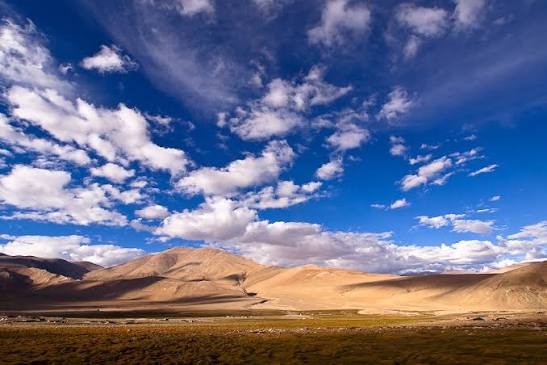
This is the route I'd treat with the most caution. The official District Leh page puts the normal Manali–Leh operating period at May/June to September/October.
October therefore sits right at the end of the stated window. That does not mean the road is automatically closed on October 1. It means a traveller building an October itinerary around Manali–Leh needs a solid backup plan.
If your whole trip depends on completing Manali → Leh by road on a specific date, you're accepting more route uncertainty than someone who flies into Leh. That doesn't make the road trip pointless. It means you should have:
- A flexible departure date
- Extra buffer days built into your schedule
- A current road status check before crossing Baralacha La
- A realistic plan for what happens if a high pass becomes temporarily inaccessible
For late October 2026, I would not market Manali–Leh as a guaranteed road-trip option.
Should you visit Ladakh by flight or road in October?
This is one of the few places where I think travellers benefit from a direct answer.
✈️ Fly to Leh if:
- You have limited holiday time (6–7 days).
- You mainly want Leh, Nubra and Pangong.
- You are travelling in the second half of October.
- You cannot afford to lose a day or two to a road disruption.
🚗 Choose a road approach if:
- The journey itself is part of the experience.
- You're travelling early enough in October for conditions to match.
- You're using Srinagar–Kargil–Leh and want to explore Drass and Kargil.
- You're comfortable with adjusting your plan on short notice.
For a first October trip, I would rather see someone fly into Leh, acclimatize properly and then explore than force an ambitious late-season overland itinerary simply because it looks more adventurous.
What should you do in Ladakh in October?
October isn't just about ticking off lakes. This is actually a good month for slower experiences because the autumn setting becomes part of the trip.
1. Explore Leh properly
Don't use Leh only as the place where your taxi changes direction. Visit the city's historical and cultural sites, walk through the old town market, spend time around Leh Palace and the monasteries, and use your first days to adjust to altitude.
Official Ladakh Tourism presents autumn as a season for clear skies, golden landscapes and photography, which fits Leh and the lower Indus Valley particularly well.
2. Photograph the autumn colours
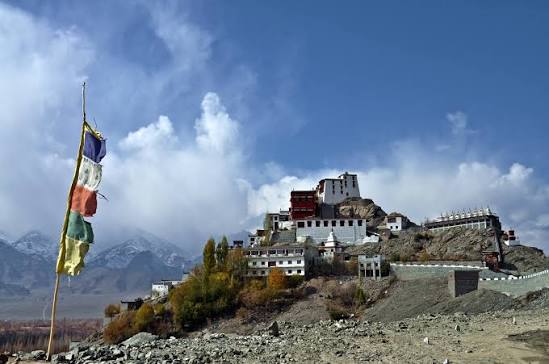
The trees in Ladakh don't behave like the lush forests you may associate with Kashmir or Himachal. That's exactly why the yellow-gold autumn vegetation stands out against the dry mountains.
Nubra and the valleys around Leh are especially useful for this kind of photography. One of the current October travel guides also highlights the autumn colours in Nubra, Sham and surrounding valleys, although those descriptions are traveller-guide observations rather than an official weather metric.
3. Visit Nubra Valley
Nubra is one of the destinations I'd keep on an October itinerary, especially in early October. Diskit and Hunder give you something completely different from central Leh: broader valley scenery, cultivated areas, sand dunes and sheer mountain walls.
But the word “October” needs to remain attached to the plan. Check:
- The Khardung La road status
- The daily mountain weather forecast
- Your overnight accommodation and heating options
Don't assume that because another traveller reached Nubra on October 28, your route on October 28 will have the exact same conditions.
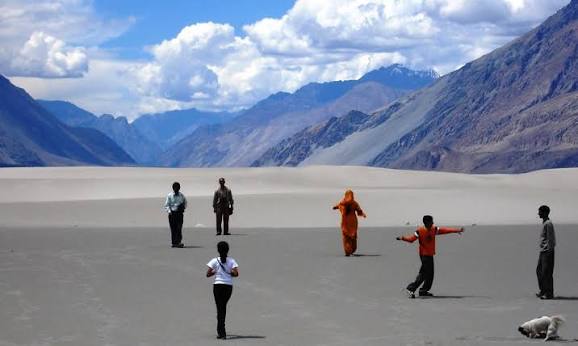
4. See Pangong Lake
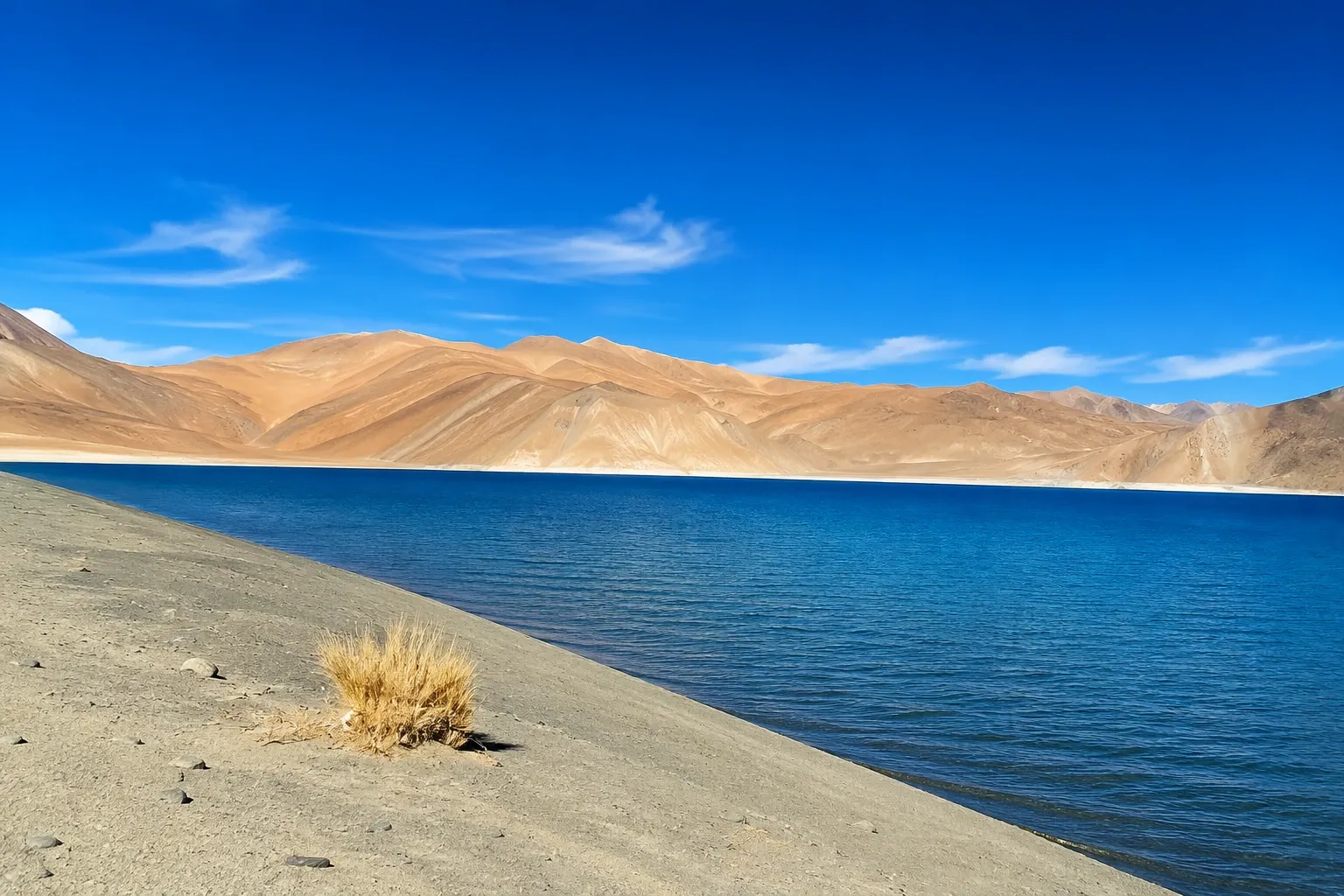
Pangong Lake is still one of Ladakh's headline destinations in October. The trick is not to underestimate the cold.
An October Pangong night is a completely different experience from a sunny Leh afternoon. The official Ladakh advisory specifically includes Pangong among the high-altitude locations covered by its extreme-temperature warning and advises adequate cold-weather equipment during October–March.
For an early October trip, an overnight stay can be planned around current conditions. For late October, ask your accommodation provider directly whether they are operating and what heating arrangements are available. Don't rely on an old summer blog post saying “Pangong camps are open.”
Is Tso Moriri worth visiting in October?
Yes—but I would put it in the weather-dependent category rather than the “must-do whatever happens” category.
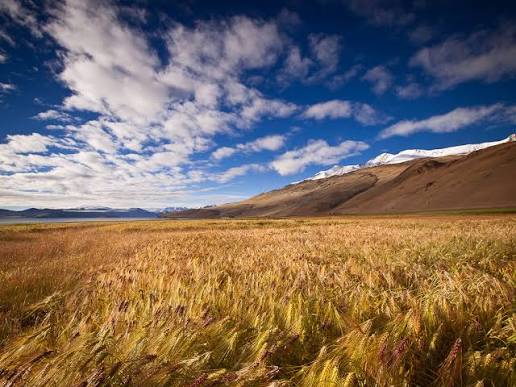
Tso Moriri is remote, high (4,522 m) and significantly colder than the Leh valley. Older specialist Ladakh guides document Tso Moriri access routes that remain usable in October, but those guides also emphasize checking road conditions before travelling, especially when snow affects passes.
That is the right way to think about it. Tso Moriri is not a problem because it is October. It is a problem when your itinerary assumes October weather will behave perfectly. For an early-October trip with good road information, it is reasonable to consider. For late October, keep it optional.
What about Zanskar in October?
This is where KargilLadakh.in has a chance to be more useful than a generic Leh travel website.
Zanskar belongs to Kargil district, and District Kargil identifies the Pensi La route as the main road connection toward Zanskar. The district's official material says the main pass to Zanskar is normally blocked from November to mid-June, which places October within the usual road-access season.
But “within the usual season” is not the same as “guaranteed on your date.” Pensi La sits at roughly 4,401–4,450 metres according to the District Kargil tourism page, so weather at the pass deserves attention as October progresses.
For someone who has 10–12 days and a genuine interest in the Kargil side of Ladakh, Zanskar is a serious alternative to stuffing more nights into the standard Leh–Nubra–Pangong circuit. For a 5-day holiday? Don't force it.
Should you visit Kargil in October?
Yes, particularly if you're coming from Srinagar. Kargil makes sense as part of the journey rather than a filler overnight.
District Kargil describes the town as a historic trade centre and highlights its museums, heritage sites, monasteries, forts, petroglyphs, mosques, war memorials and surrounding adventure destinations.
Drass is also worth treating as more than a fuel stop. The district tourism site describes Drass as an important halting place on the route toward Leh and Kargil and lists views of Tiger Hill and Tololing among its attractions.
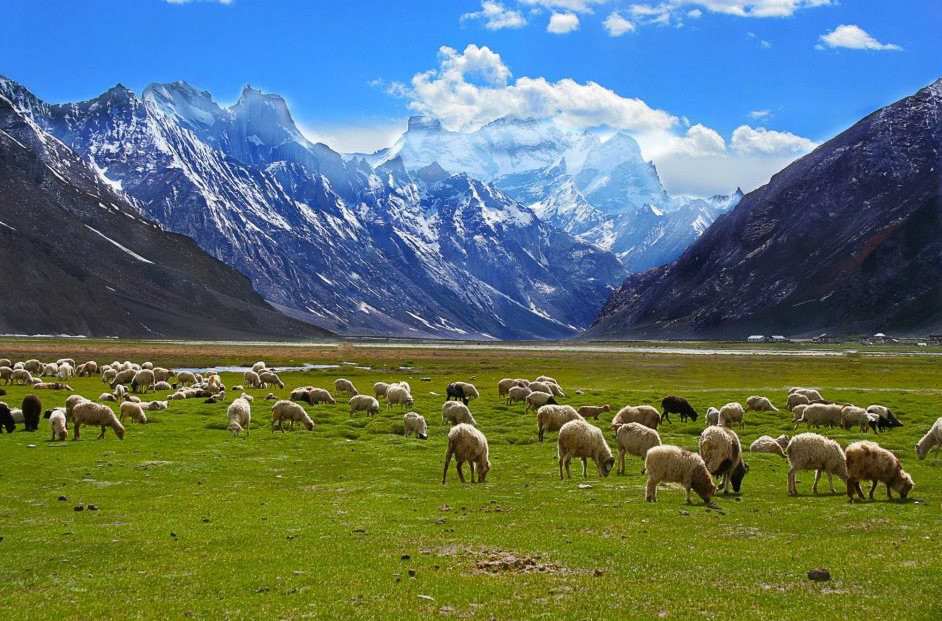
Then there is Suru Valley. The Kargil administration lists places including Sankoo, Panikhar, Parkachik and Rangdum, with breathtaking Nun–Kun scenery and access to trekking and mountain activities. This is the kind of detail that separates a Kargil-focused travel guide from another generic “Top 10 Ladakh Places” list.
What October Actually Feels Like on the Ground
"Having grown up in Kargil, October is my personal favorite time of year, but you have to know its rhythm. Mornings in Drass and Suru Valley start with a sharp, glass-like frost on the grass and water buckets that freeze overnight by mid-month. Yet between 11:00 AM and 3:30 PM, the autumn sunshine is so pure and warm that you will gladly walk around in just a light fleece."
"The critical moment happens at 4:30 PM: the exact minute the sun slips behind the mountain ridge, the temperature plunges 10 degrees in half an hour. By mid-October, local families are finishing their apricot drying, stacking winter firewood, and preparing for the first light dusting on the surrounding ridges. If you visit now, you get empty monastery courtyards, local smiles without the summer rush, and golden willow trees that make the landscape look like an oil painting."
What should you pack for Ladakh in October?
Pack for layers and cold, not for one number on a weather app. The official Ladakh Tourism advisory specifically recommends cold-weather gear, thermal wear and emergency supplies for travel from October through March.
For a normal October trip, build your clothing around:
- Base Layer: High-quality thermal innerwear (merino wool or synthetic, top and bottom).
- Mid Layer: A warm fleece jacket or wool sweater for daytime temperature changes.
- Insulation Layer: A proper heavy down jacket for evenings, high passes, and lake nights.
- Outer Layer: A windproof and water-resistant shell jacket for mountain roads and high windchill.
- Accessories: Woollen socks (at least 3–4 pairs), fleece-lined gloves, and a snug beanie or balaclava.
Then the items people remember only after arriving: sunglasses (UV400 protection), high SPF sunscreen (SPF 50+), and moisturizing lip balm. The high-altitude sun can burn severely even when the air feels freezing.
If you're taking a motorcycle, add proper armored waterproof riding gloves, knee protectors, and windproof thermal riding pants rather than relying on ordinary winter jeans.
What about altitude sickness in October?
October does not reduce altitude risk. This is a physiological health issue, not a seasonal sightseeing issue.
The official Ladakh Tourism advisory mandates that all tourists arriving in Leh must undergo at least 48 hours of complete rest for acclimatization before travelling to higher-altitude areas. It also warns about Acute Mountain Sickness (AMS) and high-altitude pulmonary edema, noting that advanced medical facilities are concentrated in Leh, with limited emergency care in remote valleys.
That means a sensible itinerary starts with Leh. Not Pangong. Not Nubra. Not an ambitious same-day pass crossing.
Leh first. Then higher. If you develop serious symptoms (persistent throbbing headache, dizziness, nausea, vomiting), do not try to “push through because the campsite is prepaid.” Descend and seek medical attention immediately.
A practical 7-day Ladakh itinerary for October
Here's the version I recommend for a traveller who wants a useful trip rather than a spreadsheet full of exhausted driving hours:
Arrive in Leh (3,524 m)
Complete physical rest. Check into your hotel, hydrate well, avoid alcohol, and let your body adapt to 11,500 feet. Do not turn your first afternoon into a race around town.
Leh Acclimatization & Light Sightseeing
Easy walking in Leh old market, Shanti Stupa, and Leh Palace in the afternoon sun. Complete the mandatory 48-hour acclimatization window.
Leh to Nubra Valley via Khardung La (5,359 m)
Cross Khardung La in late morning after the road warms up. Descend into Nubra Valley, visit Diskit Monastery, and stay overnight in Hunder.
Explore Nubra Valley (Hunder & Turtuk)
Enjoy Hunder sand dunes, the double-humped Bactrian camels, and photograph the golden autumn poplars across the valley floor.
Nubra to Pangong Lake via Shyok Route
Travel along the scenic Shyok river route (check morning status). Arrive at Pangong Lake (4,250 m) to catch the afternoon cobalt colors. Stay overnight only if confirmed heated rooms are available.
Pangong Lake to Leh via Chang La (5,360 m)
Early sunrise photography over the crystal lake. Cross Chang La before mid-afternoon and return to Leh for a warm dinner.
Departure or Essential Weather Buffer
Board your morning flight back from Leh (IXL), or ideally keep this day as a safety buffer against unexpected road or flight delays.
A better itinerary if you're travelling from Srinagar
For travellers entering from Kashmir, I'd build the trip around the road journey:
Srinagar → Sonamarg → Drass → Kargil → Lamayuru → Leh → Nubra → Pangong → Leh
The official District Leh page identifies the Srinagar–Leh highway as a 434-km route via Srinagar, Drass, Kargil and Leh. And District Kargil confirms Drass's role as a major halt for travellers on this route.
This is where a Kargil-based guide adds something genuine: give the traveller a reason to stop. Instead of treating Kargil as just a place to sleep, explore Drass War Memorial, the Suru Valley viewpoints, local Kargil apricots, and ancient rock carvings before continuing to Leh.
What about a Ladakh bike trip in October?
This is where I would be selective.
Early October: Possible, subject to current road and weather conditions.
Late October: Significantly harder to build around fixed overland assumptions.
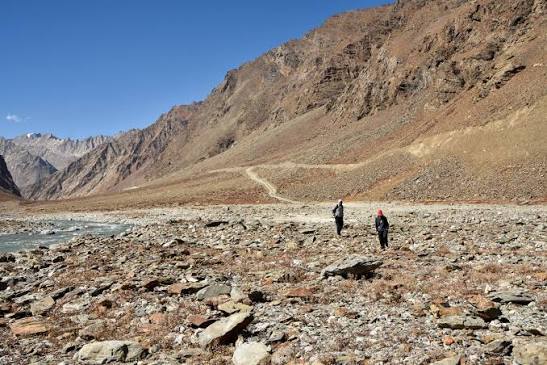
The official road-season information alone tells you why. Manali–Leh's normal operating window is listed only through September/October, while Srinagar–Leh has a longer listed seasonal window. A bike trip also exposes you to wind and cold far more directly than sitting inside a heated car.
Your planning should focus on:
- Shorter daily riding hours (finish every ride by 4:00 PM before dusk).
- Heavy thermal and windproof riding gear with winter gloves.
- Generous weather buffers for high pass snow clearance.
- Advance confirmation of open fuel pumps and mechanics.
What do Reddit travellers say about October?
This is one place where Reddit is useful—but only for understanding the question, not proving the answer.
A thread on r/ladakh asking about late September versus early October drew comments consistently focused on biting cold, severe windchill and a strong preference for earlier travel dates. Another post on r/SoloTravel_India shows a traveller planning a first-week October flight to Leh and asking about transport availability, AMS, and which high-altitude camps remain operational.
The pattern is more interesting than any single comment: people are not really asking whether October exists. They're asking how far into October they should push their itinerary. That's the right question.
What things should you avoid promising travellers in October?
This is where a lot of travel content becomes misleading:
- Don't promise fixed pass closure dates unless the Border Roads Organisation (BRO) or district administration has officially announced them.
- Don't promise that every Pangong tent camp will be operating—most tented setups dismantle by mid-October.
- Don't promise that the Manali–Leh highway is definitely open throughout October.
- Don't promise zero snowfall—high passes can receive snow dustings any week in October.
- Don't quote Leh's daytime average temperature as Pangong's nighttime temperature.
- Don't tell travellers to skip the 48-hour acclimatization because “it is colder outside.” Altitude sickness is unaffected by air temperature.
Is October 2026 a good time to visit Ladakh?
For October 2026, I'd split the answer by traveller rather than declaring the month simply “good” or “bad.”
✅ October makes sense for you if:
- You enjoy crisp cold weather and crystal-clear skies.
- You want to avoid peak-season summer tourist crowds.
- You love landscape photography and golden autumn foliage.
- You can keep your schedule flexible with spare days.
- You're happy flying into Leh rather than relying on late-season mountain passes.
⚠️ October is less suitable if:
- You need 100% predictable overland road connections.
- You have a tight, inflexible holiday schedule.
- You are depending on Manali–Leh for a specific connection.
- You strongly dislike freezing sub-zero nights.
- You expect luxury glamping camps at remote lakes to be running.
One useful October event to know about in 2026
For travellers arriving right at the end of September or on October 1, 2026, the official Ladakh Tourism events calendar lists the Himalayan Film Festival from September 29 to October 1 across Ladakh.
That's not a reason to build an entire trip around the event. But if your dates already overlap, it is well worth checking the screening programme before you finalize your local Leh sightseeing days.
So, is Ladakh in October worth it?
Yes—but only if you treat October as a transition month.
Early October and late October are not equally predictable. Leh is not Pangong. A published seasonal road window is not a daily guarantee. And a clear weather forecast in town does not tell you what happened overnight at a 5,000-metre pass.
That's not a reason to stay home. It's a reason to plan intelligently.
For a first visit, early October + flight to Leh + 48-hour acclimatization + confirmed heated accommodation + one buffer day is a much cleaner plan than squeezing a late-season Manali–Leh motorcycle crossing into a fixed 7-day vacation.
For a Srinagar road trip, give Kargil and Drass some attention instead of treating them as places to sleep. And before you leave for any high pass, lake or remote valley, check the latest official road and weather advisory on the morning of departure.
That's the October rule I'd actually use.
Ladakh in October: Quick Travel Dashboard
Key operational facts, route windows, and seasonal baselines at a glance
Pangong & High Lakes: 5°C to 8°C day / −4°C to −10°C freezing nights.
Manali–Leh: Window ends late Oct; expect ice and early pass closures.
Traveler Questions & Ground Updates