Yes, Ladakh is fully open and at its visual best in September, offering clear skies, receding monsoon rains, and open highways. Expect comfortable daytime temperatures (15°C to 20°C in Leh) but sub-zero nights at Pangong and high passes. Early September is prime for road trips; late September brings biting winds and early pass dusting.
If you are deciding whether to make a Ladakh September trip, my answer is an enthusiastic yes—with one condition: plan for changing conditions rather than assuming every road, pass, and campsite will behave like it did in August.
🍂 LADAKH — SEPTEMBER TRAVEL DASHBOARD
Key operational baselines & autumn route readiness at a glance
Pangong & Tso Moriri plunge below freezing (−2°C to −6°C) after dusk.
Khardung La, Chang La & Baralacha La may experience temporary 6-hour clearing halts.
Mandatory 48-hour rest protocol in Leh is legally required upon landing.
Solar hot water struggles at dawn; homestays provide hot water in buckets.
Heavy windchill on open plains; stop riding strictly before 5:00 PM.

Written by Zulkarnain — Local Scout & High-Altitude Practitioner
Born and raised in Kargil, I drive and monitor the mountain highways across Zoji La, Pensi La, Fotu La, and Khardung La throughout the operating season. This guide cuts through promotional travel agent copy to deliver the exact on-ground operational reality you will encounter on the road in September.
What is Ladakh like in September?
September sits between Ladakh's high-summer travel rush and the biting cold of early winter.
The official Ladakh Tourism website classifies September within both its active summer travel window and its autumn season, describing September and October as a period of golden landscapes and clear skies.
That description makes immediate sense once you are on the ground. By the first week of September, the southwest monsoon that causes landslides across lower Himachal and Uttarakhand has retreated. Cloud cover rolls back, leaving deep cobalt skies and crisp mountain air without summer dust or haze.
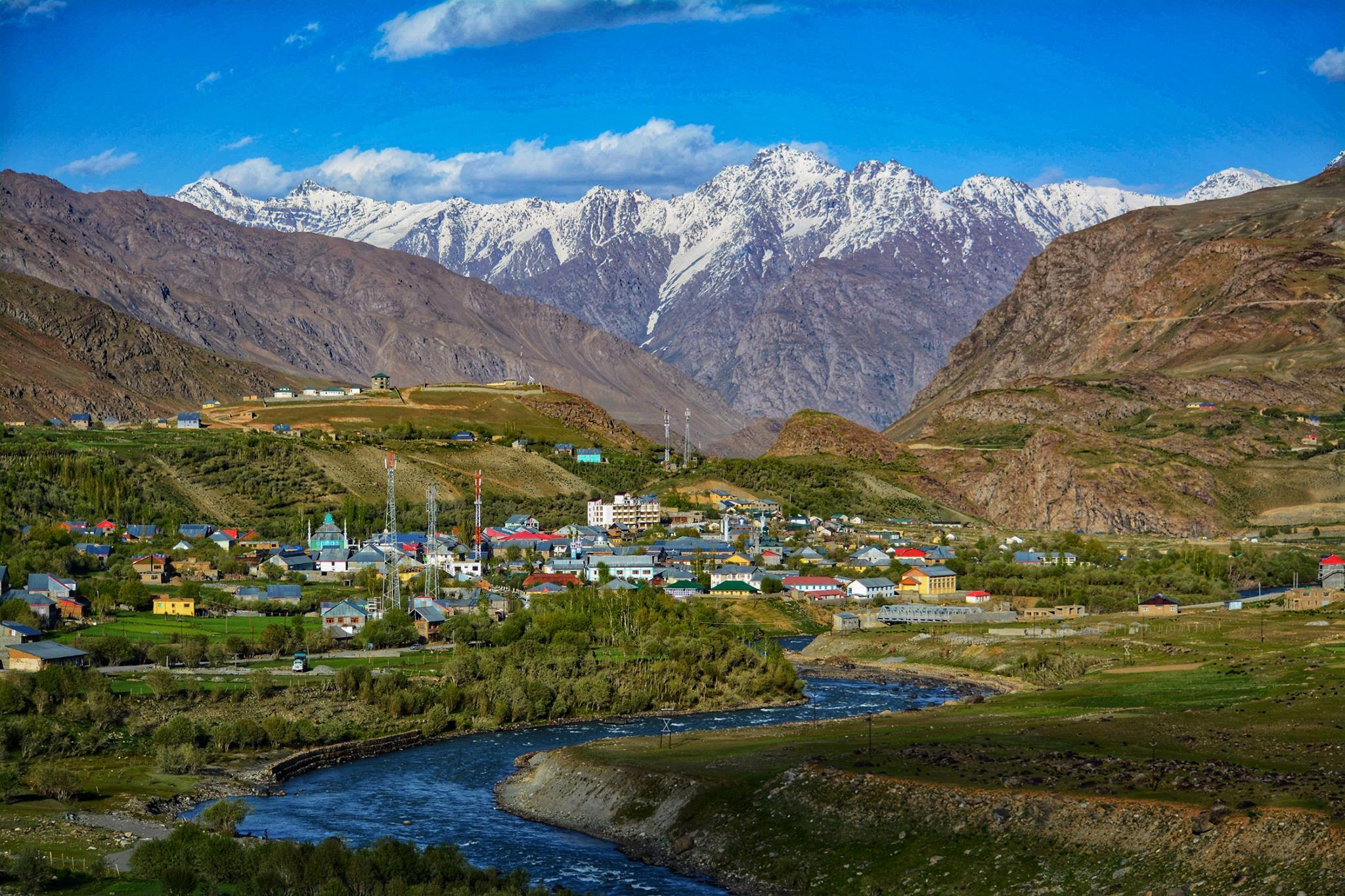
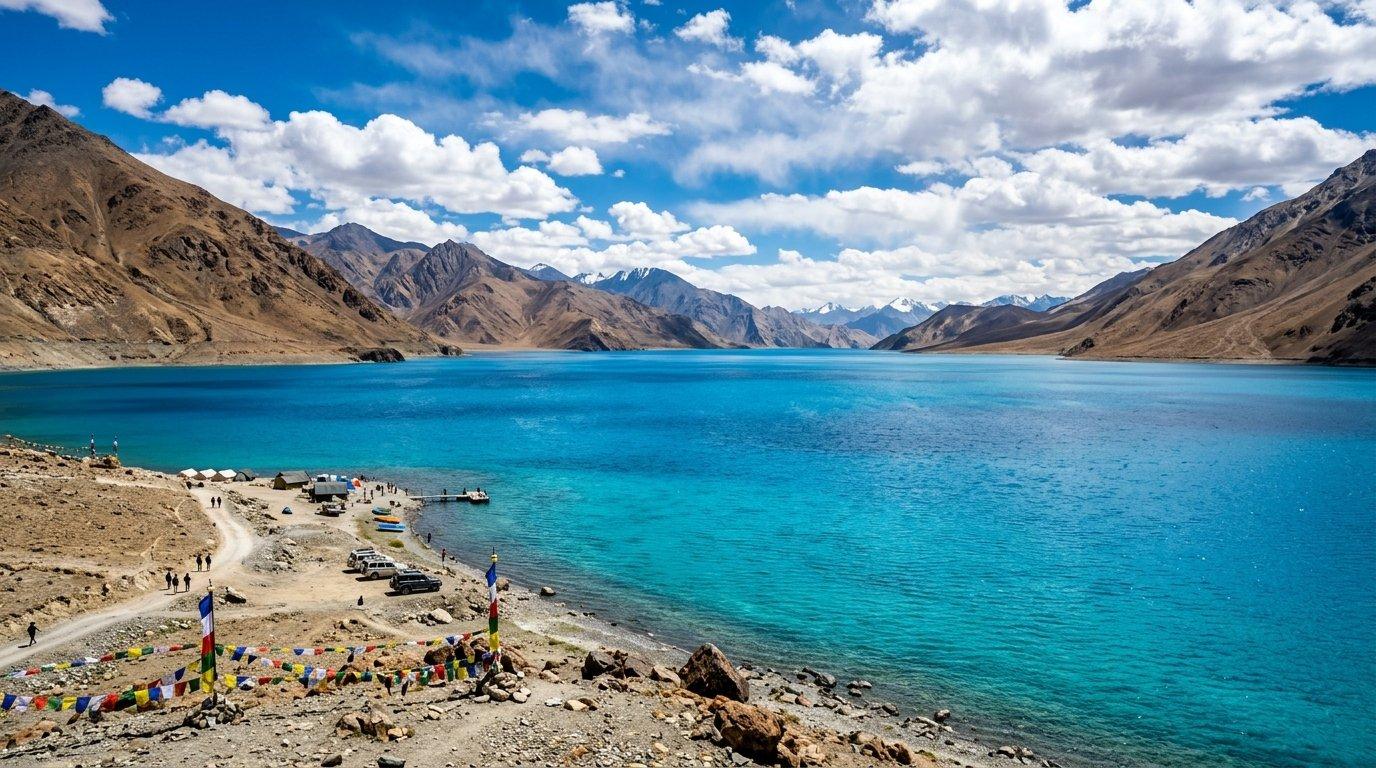
Across the valleys—from the Indus in Leh to the Suru River in Kargil—poplar and willow groves turn brilliant shades of bronze, gold, and amber. Fields of golden barley are harvested by local farmers, filling the mountain villages with activity.
Crowds drop off noticeably. The long lines of vehicles at Khardung La and the crowded viewpoints at Pangong Lake thin out.
The catch is the temperature drop. In Leh, the midday sun makes an afternoon stroll feel warm. Step into the shade or wait until 5:30 PM, and the temperature changes rapidly. Higher places such as Pangong Lake and Tso Moriri enter proper sub-zero territory every single night.
What is the Ladakh temperature in September?
There is no single "Ladakh temperature in September."
The official Leh district administration notes that Ladakh has a dry climate, with summer temperatures in Leh rarely exceeding 30°C, while its published travel guidance warns that temperatures begin falling from the second half of August and that woollens become necessary even during the daytime from mid-September.
Ladakh spans an altitude range from 2,676 meters in Kargil to over 5,300 meters on the mountain passes. Quoting an average number from a generic weather app will mislead you. You must think in terms of: Location + Altitude + Time of Day.
| Area | Elevation | Daytime (Sun) | Night / Dawn | What It Actually Feels Like |
|---|---|---|---|---|
| Kargil | 2,676 m | 20°C to 25°C | 8°C to 12°C | Mild and comfortable; pleasant riverside walks. |
| Drass | 3,280 m | 16°C to 21°C | 3°C to 7°C | Open mountain valley; cool winds pick up by late afternoon. |
| Leh Town | 3,524 m | 15°C to 20°C | 2°C to 6°C | Warm in direct sun; sharp cold immediately after dusk. |
| Nubra Valley (Diskit/Hunder) | 3,048 m | 18°C to 23°C | 5°C to 9°C | Noticeably warmer than Leh; comfortable on sand dunes. |
| Pangong Lake (Spangmik) | 4,250 m | 9°C to 14°C | −2°C to −6°C | Biting wind along the water; sub-zero overnight freeze. |
| Tso Moriri (Korzok) | 4,522 m | 7°C to 12°C | −4°C to −8°C | Exposed high plateau; ground frost visible at dawn. |
| Khardung La / Chang La | 5,350+ m | 0°C to 5°C | −5°C to −12°C | Sub-zero windchill; icy road patches in shaded curves. |
| Zanskar (Padum) | 3,669 m | 14°C to 19°C | 0°C to 4°C | Dry, clear air; rapidly cooling evenings across the valley. |
Early September vs. Late September: The Critical Split
This distinction deserves careful attention. Many travelers treat September as one uniform block. In reality, the first two weeks and the last two weeks are two completely different operational phases.
September 1 to September 15 (The Golden Window)
- Weather: Late-summer feel; daytime in Leh hovers around 18°C to 22°C.
- Roads: Both Srinagar–Leh and Manali–Leh run on normal seasonal timetables.
- Water Crossings: Mountain streams (nallahs) carry significantly less meltwater than July/August.
- Stays & Camps: All luxury camps, remote homestays, and guesthouses are fully open with operational plumbing.
- Best for: Bike trips, first-time travelers, and those wanting a comfortable road journey.
September 16 to September 30 (Autumn to Early Winter)
- Weather: Temperatures drop across the board by 4°C to 7°C; crisp, frosty mornings.
- Leh Guidance: Official advisory states woollens are needed even during daytime sun.
- Pass Hazards: High passes (Khardung La, Chang La, Baralacha La) face occasional light snowfall and black ice.
- Camp Closures: Lakeside camps at Pangong and Sarchu begin dismantling structures around September 20–25.
- Best for: Experienced photographers, harvest landscapes, and travelers with built-in buffer days.
September Week-by-Week Autumn Progression Matrix
Because atmospheric shifts accelerate dramatically across the trans-Himalayan plateau in autumn, planning by calendar week prevents unexpected disruptions. Here is how Ladakh transforms every seven days through September:
| Timeline | Day / Night Temps (Leh) | Foliage & Landscape | Pass & Highway Reliability | Stays & Logistics |
|---|---|---|---|---|
| Week 1 (Sep 1–7) Late Summer Transition |
18°C to 22°C 5°C to 8°C |
Valleys remain mostly green with subtle lime-gold tinting along riverbanks. High rivers begin clearing to turquoise. | Near 100% open. Srinagar and Manali highways operating on standard schedules; water crossings (nallahs) notably lower. | All luxury camps, glamping tents, homestays, and road dhabas fully operational with running water. |
| Week 2 (Sep 8–14) Autumn Colors Ignite |
16°C to 20°C 3°C to 6°C |
Poplar and willow trees across Suru Valley, Nubra, and Sham Valley turn brilliant golden bronze. Ladakh Festival cultural events. | Excellent road conditions. Crisp morning air. Minimal cloud cover and virtually zero monsoon moisture from plains. | Peak period for comfortable road trips. Campsites at Pangong and Sarchu operate normally; room heaters start seeing evening use. |
| Week 3 (Sep 15–21) Peak Harvest & Frost |
14°C to 18°C 1°C to 4°C |
Peak golden foliage. Barley harvest festivals in Zanskar (Sani Monastery Festival around Sep 15–16). First morning ground frosts. | High passes remain open, but early morning black ice appears on Baralacha La (4,890 m). Avoid pass crossings before 8:30 AM. | Pangong night temperatures drop to −3°C. Solar water heating becomes sluggish at dawn; bucket hot water provided. |
| Week 4 (Sep 22–30) Autumn to Pre-Winter |
12°C to 16°C −2°C to 2°C |
Leaves begin shedding, exposing dramatic barren mountain ridges under cloudless indigo skies. Peak astrophotography window. | Occasional light dustings of snow on Khardung La and Chang La (cleared in 3–6 hrs by BRO). Manali highway transit becomes risky. | Seasonal canvas tented camps at Pangong and Sarchu dismantle for winter (~Sep 22–25). Shift to concrete guesthouses in Tangtse. |
Does it snow in Ladakh in September?
Snowfall in Leh town, Kargil, or the floor of the Nubra Valley is not something you should expect in September.
High mountain passes are a different matter.
Late-season snowfall can affect high passes and transit routes, particularly toward the final ten days of the month. Travel alerts specifically flag Khardung La, Chang La, and the high-altitude passes of the Manali–Leh highway (Baralacha La, Lachung La, and Tanglang La) as locations where brief snow showers can occur.
That does not mean Ladakh gets buried in winter snow in September.
Pass closures in September are usually short-lived. A sudden squall might dump 2 to 4 inches of wet snow over Baralacha La or Chang La, causing traffic police and the Border Roads Organisation (BRO) to hold traffic for 4 to 12 hours while snowploughs clear the black ice. Once the sun warms the asphalt, transit resumes.
Are Ladakh roads open in September?
Usually, yes—but "seasonally open" and "open on the exact morning you drive" are two distinct concepts.
The District Leh administration states that the Srinagar–Leh Highway normally remains open from May to November/December, while the Manali–Leh Highway normally operates from May/June to September/October.
Government planning bulletins emphasize that road openings and closures depend on live weather conditions, snowfall, landslides, and pass clearance operations.
1. Srinagar to Leh in September (The Established Route)
The 434-km Srinagar–Leh Highway (NH-1) enters Ladakh through Kashmir, passing through Sonamarg, Zoji La Pass (3,528 m), Drass, and Kargil before continuing toward Lamayuru and Leh.
For September travelers, this is by far the most reliable road. Because it crosses only one high mountain pass (Zoji La), it is significantly less prone to early autumn snow closures than the Manali route. The BRO maintains Zoji La aggressively deep into November.
Traveling via Srinagar also gives your body a gradual, stepped acclimatization profile. You sleep in Kargil (2,676 m) before reaching Leh (3,524 m), which slashes your risk of acute mountain sickness.
Check out our dedicated guides to Crossing Zoji La Pass and the full Live Srinagar to Leh Highway Status.
2. Manali to Leh in September (Late-Season Caution)
The 473-km Manali–Leh Highway is the classic high-altitude adventure route, but September sits at the tail end of its comfortable operating window.
The highway traverses four enormous passes: Baralacha La (4,890 m), Nakee La (4,739 m), Lachung La (5,059 m), and Tanglang La (5,328 m). By mid-to-late September, overnight temperatures on the high plateau between Sarchu and Pang regularly fall well below freezing. Water running across shaded switchbacks turns into slick, transparent black ice in the early morning hours.
If you plan a Ladakh bike trip in September from Manali, aim to complete the Manali–Leh stretch before September 18. If driving later in the month, never start crossing high passes before 8:30 AM when the morning sun has had time to soften road ice.
How to Reach Ladakh in September (Flights, Roads & Vehicle Regulations)
September is one of the rare months where both overland highways and commercial flights are simultaneously operational. Choosing your mode of transit shapes your acclimatization curve and trip budget:
1. By Flight (Kushok Bakula Rimpochee Airport — IXL, Leh)
Flying directly into Leh (3,524 m) is the fastest option, with daily morning departures from New Delhi, Mumbai, Srinagar, and Chandigarh. Flight operations in September enjoy exceptional on-time reliability due to cloudless morning skies, with far fewer cancellations than during peak winter fog or monsoon rains.
- Booking Secret: When flying from New Delhi to Leh, select a window seat on the left side of the aircraft (Seat A). You will enjoy an unforgettable aerial panorama of Nun Kun, the Zanskar ranges, and K2 in the Karakoram. On the return flight back to Delhi, choose the right side (Seat F).
- Early Morning Schedules: Nearly all flights into Leh land between 6:30 AM and 10:30 AM. Air density drops rapidly as mountain slopes heat up by noon, creating severe thermals and winds that make afternoon landings hazardous.
- The Acclimatization Trap: Flying catapults you from sea level to 11,500 feet in under 90 minutes. You must budget two full calendar days of complete rest in Leh before attempting any sightseeing.
2. By Road via Srinagar–Kargil–Leh (NH-1) — Recommended
The 434-km Srinagar–Leh Highway is widely recognized by mountain travelers as the safest and most gradual overland route into Ladakh. The route crosses Zoji La Pass (3,528 m) and proceeds along the Drass and Suru rivers to Kargil before climbing Fotu La (4,108 m) into Leh.
- Acclimatization Advantage: By breaking your journey with an overnight halt in Kargil (2,676 m), your body steps up altitude gradually, drastically reducing the severity of Acute Mountain Sickness (AMS).
- Scenic Highlights: Golden birch forests in Sonamarg, the dramatic Kargil War Memorial under Tololing peak in Drass, the ancient rock-carved Maitreya Buddha at Mulbekh, and the lunar topography of Lamayuru.
- Transit Duration: 2 comfortable days (Srinagar → Kargil on Day 1; Kargil → Leh on Day 2).
3. By Road via Manali–Leh (NH-3)
The 473-km Manali–Leh Highway is the iconic high-altitude Himalayan road trip. The route passes through the engineering marvel of Atal Tunnel (9.02 km), traverses Lahaul Valley to Jispa, and crosses four formidable passes: Baralacha La (4,890 m), Nakee La (4,739 m), Lachung La (5,059 m), and Tanglang La (5,328 m).
- Where to Sleep: Always overnight at Jispa (3,200 m) or Keylong. Never sleep at Sarchu (4,290 m) or Pang (4,500 m) on your first night. Sleeping at 14,000 feet without prior acclimatization causes severe AMS, sleeplessness, and vomiting for over 70% of travelers.
- Late September Caution: After September 18, high passes on this highway experience freezing morning black ice. Start driving only after the morning sun warms shaded hairpin turns.
- Transit Duration: 2 days (Manali → Jispa on Day 1; Jispa → Leh on Day 2).
• Self-Drive Rental Cars: Zoomcars, Revv, or self-drive commercial rental cars hired outside Ladakh (e.g., Delhi, Chandigarh, Srinagar, Manali) are strictly prohibited from plying on internal sightseeing circuits (Nubra Valley, Pangong Tso, Tso Moriri, Hanle). You may only drive them to Leh town and park at your hotel.
• Outside Rental Bikes: Motorbikes rented in Manali or Delhi cannot be used for internal circuits beyond Leh. You must park your outside rental in Leh and hire a Leh-registered motorbike or union taxi for Khardung La, Nubra, and Pangong.
• Privately Owned Vehicles: If you drive your own personally registered car or motorcycle (vehicle registration card must match your name or immediate family with valid ID proof), you are 100% permitted to drive everywhere in Ladakh without restriction.
What are the road conditions inside Ladakh in September?
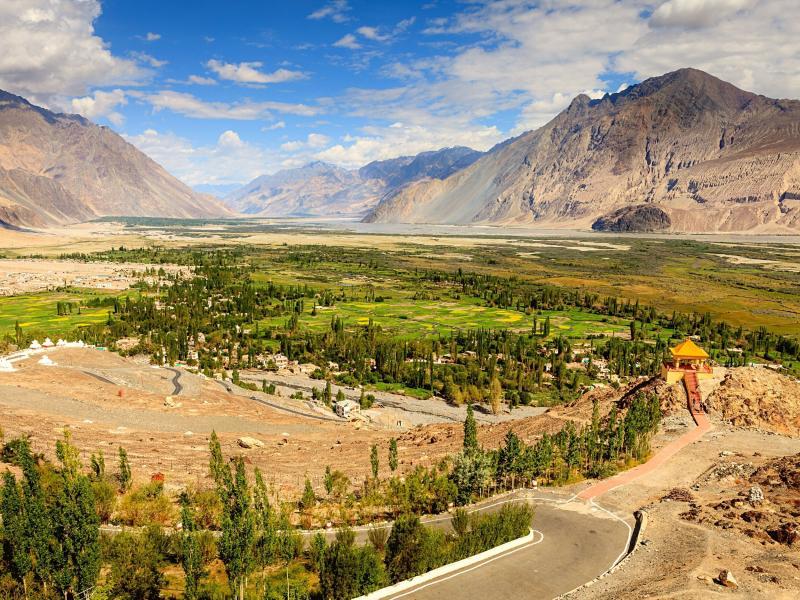
Avoid assuming that "good roads" means smooth tarmac throughout. Some stretches are freshly paved, while others remain rocky and slow.
For September travel, evaluate road conditions across four main circuits:
- Leh to Nubra Valley (via Khardung La): Paved for the majority of the climb. The 10 km on either side of the summit has broken tarmac and potholes from meltwater runoff.
- Nubra to Pangong (via Shyok Route): Fast and broad riverbed road. The notorious water crossings at Agham–Shyok are much gentler in September compared to high-summer floods, though loose rockfall remains possible.
- Pangong to Leh (via Chang La): Smooth tarmac up to Karu; rougher switchbacks with loose gravel near the Chang La summit.
- Kargil to Padum (Zanskar Valley): Paved past Sankoo and Panikhar in Suru Valley. Beyond Rangdum toward Pensi La, the road is unpaved, featuring gravel and washboards. An SUV with generous ground clearance is required.
Is September a good month for a Ladakh bike trip?
Yes—September is an outstanding month for experienced motorcycle riders who understand cold weather and altitude.
Summer riders face muddy river crossings and monsoon rain in the foothills. In September, the mud is gone and water crossings are manageable. What takes their place is cold windchill.
Cruising at 60 km/h across the More Plains at 4,800 meters in 6°C air creates an effective windchill well below freezing. Perforated summer riding gloves will leave your fingers numb and your braking reflexes impaired within 20 minutes.
- Insulated, Windproof Gloves: Bring winter riding gloves with waterproof membranes, plus a pair of thin thermal fleece inner liners.
- No Night Riding: Be off the road and checked into your hotel or homestay by 5:00 PM. Black ice forms on mountain roads as soon as shadows fall.
- Daily Tire Checks: Check tire pressures every morning; cold overnight temperatures cause pressure drops.
- Tool Kit & Inflator: Carry a portable electric tire inflator and a tubeless puncture repair kit. Puncture repair shops between Sarchu and Karu are scarce.
What should you wear in Ladakh in September?
Pack a flexible layering system, not one heavy, bulky jacket over thin cotton shirts.
The official Leh tourism guidance advises that warmer clothing becomes necessary as September progresses, with woollens required even during the daytime from mid-month.
A layered clothing system allows you to adapt as you transition between a warm sunny afternoon in Leh and a freezing evening beside Pangong Lake.
The 4-Layer System
- Base Layer: Thermal inner tops and bottoms (synthetic or merino wool). They wick sweat while retaining core warmth on cold pass crossings and lake nights.
- Mid Layer: A breathable fleece jacket or lightweight woollen pullover for standard daytime travel.
- Insulation Layer: A packable down jacket or synthetic insulated puffer coat for cold mornings and evenings.
- Outer Shell: A windproof and water-resistant jacket. Stopping high-altitude mountain winds is critical to retaining body heat.
| Gear Item | Why You Will Need It in September |
|---|---|
| Thermal Base Layers | Keeps your core warm during sub-zero nights at Pangong and dawn pass crossings. |
| Fleece Pullover | Flexible mid-layer for driving during sunny, cool afternoons. |
| Insulated Down Jacket | Essential when the sun sets and temperatures plummet below freezing. |
| Windproof Outer Shell | Blocks biting mountain winds on high passes like Khardung La and Chang La. |
| Heavy Woollen Socks (2–3 pairs) | Cold feet ruin an otherwise enjoyable road trip; keep a spare pair dry in your daypack. |
| Insulated Gloves & Beanie | Prevents rapid heat loss from extremities during early departures. |
| UV400 Polarized Sunglasses | High-altitude UV radiation is intense; protects against severe eye glare and headaches. |
| SPF 50+ Sunscreen & Lip Balm | Dry, cold mountain air cracks unconditioned skin and lips within two days. |
| Sturdy Grippy Shoes | Required for walking across uneven monastery stone steps, gravel trails, and dunes. |
Recommended Autumn Gear Checklist for Ladakh
High-altitude autumn conditions demand technical gear designed to block mountain wind while retaining core warmth without excessive bulk. Based on years of mountain scouting, these are the essential gear items we recommend for a comfortable September journey:
🧥 Technical Windproof Shell Jacket
Biting 40 km/h winds atop Khardung La and Chang La cut through knitwear. A breathable, wind-resistant outer shell with taped seams stops windchill instantly.
View Windproof Shell Jackets →🩲 Merino Wool / Thermal Innerwear
Snug moisture-wicking thermal tops and bottoms for freezing Pangong nights (−4°C) and dawn pass crossings. Merino wool resists odors during multi-day expeditions.
Check Thermal Base Layers →🧥 Lightweight Packable Down Jacket
An 800+ fill power down puffer compresses into a small pouch in your daypack and provides instant loft warmth when evening shadows fall at high altitude.
Check Insulated Down Jackets →🧤 Cold-Weather Windproof Gloves
Fingers stiffen rapidly in sub-zero wind. Use windproof insulated gloves with silicone palm grip and touchscreen fingertips for photography.
View All-Weather Mountain Gloves →🥾 High-Traction Hiking Boots
Uneven ancient monastery stone steps, loose gravel at Pangong, and sand dunes at Hunder require sturdy lugged soles and firm ankle support.
Check High-Traction Boots →🕶️ Polarized UV400 Mountain Glasses
Atmospheric UV radiation increases by 10–12% per 1,000 meters of elevation. High-grade UV400 polarization prevents debilitating headaches and glare fatigue.
Check UV400 Mountain Eyewear →🔋 20,000mAh Cold-Resistant Power Bank
Sub-zero temperatures deplete smartphone and mirrorless camera lithium batteries up to 40% faster. Carry a reliable high-capacity battery pack in an inner pocket.
Check Fast-Charging Power Banks →🧴 Broad-Spectrum SPF 50+ & Lip Butter
Dry trans-Himalayan air combined with high UV will blister unconditioned lips and skin within 48 hours. Apply broad-spectrum SPF 50+ mineral sunscreen every 3 hours.
View Sun Protection & Balm →Do you need to worry about altitude in September?
Yes. Pleasant autumn sunshine does not increase oxygen partial pressure.
The official Ladakh Tourism advisory strictly requires all tourists arriving in Leh by air to complete at least 48 hours of acclimatization before traveling to higher-altitude regions such as Khardung La, Nubra Valley, or Pangong Lake.
The District Leh administration similarly advises that travelers arriving by air must take two days of complete rest, whereas travelers arriving by road gain altitude more gradually.
Do not land at Leh airport at 9:00 AM and plan to visit Khardung La or Pangong Lake the next morning. Your first day must be deliberately restful:
- Remain in your hotel room and rest flat for the first 24 hours.
- Hydrate steadily with warm water, clear soups, and oral rehydration salts (ORS) — aim for 3.5 to 4 liters per day.
- Avoid alcohol, smoking, sleeping pills, and heavy physical exercise during the first 48 hours.
- Carry a fingertip pulse oximeter: a resting SpO2 of 75%–85% is normal during the first 24 hours in Leh. If oxygen saturation drops below 70% accompanied by persistent breathlessness or severe headache, visit Leh’s SNM District Hospital immediately for oxygen therapy.
- Consult your physician before departure regarding prophylactic medication such as Acetazolamide (Diamox 125 mg to 250 mg twice daily starting 24 hours prior to arrival).
Inner Line Permits (ILP), Protected Area Permits & Border Checkposts
Because Ladakh shares strategic international borders with Tibet/China and Pakistan, all travelers require official authorization to visit sensitive boundary circuits:
🌐 How to Apply Online
Apply via the official Ladakh Administration portal (lahdclehpermit.in) or through any registered travel agent in Leh. You can complete the application in 10 minutes from your phone before departure.
💰 Official Fee Structure
• Green Environmental Fee: ₹400 per person
• Red Cross Society Fund: ₹100 per person
• Wildlife Protection Fee: ₹20 per day per person
Total typical cost for a 7-day trip is roughly ₹640 per traveler.
📍 Circuits Requiring Permits
Nubra Valley (Khardung La, Diskit, Hunder, Turtuk, Tyakshi), Pangong Tso (Spangmik, Man, Merak), Changthang & Hanle (Dark Sky Reserve), Chushul & Tsaga La, and Tso Moriri (Korzok).
🛂 Foreign Nationals (PAP Rules)
Foreign passport holders receive a Protected Area Permit (PAP) issued in a minimum group of two persons via an accredited Leh travel agency. Citizens of Afghanistan, China, and Pakistan require prior clearance from MHA New Delhi.
Mobile SIMs, Fuel Stations & ATM Cash Realities in September
Planning high-altitude logistics requires understanding where digital infrastructure ceases to exist. Here is what you will encounter on the road:
1. Mobile Network & SIM Card Rules
- Prepaid SIMs Do NOT Work: Due to Department of Telecommunications (DoT) security regulations, prepaid SIM cards issued in any state outside Jammu & Kashmir and Ladakh are automatically blocked upon entering the region.
- Postpaid SIMs Required: Nationwide POSTPAID SIM cards from Jio, Airtel, and BSNL work seamlessly. Jio offers the fastest 4G/5G data coverage in Leh town, Kargil, Drass, and major settlements in Nubra Valley (Diskit, Hunder).
- Buying a Local SIM: If you only have prepaid connections, you can buy a local J&K/Ladakh prepaid SIM card in Leh Main Bazaar or Choglamsar using your original Aadhaar Card / Passport. Activation takes 2 to 4 hours.
- Remote Valley Connectivity: Mobile connectivity drops off beyond Tangtse towards Pangong Lake and along the Shyok riverbed. BSNL provides basic voice calling in remote Changthang and Hanle.
2. Petrol Pumps & Fuel Strategy
Running dry between mountain passes is a dangerous reality. Always observe the local refueling baseline:
- Leh & Vicinity: Multiple full-service fuel stations operate along NH-1 in Choglamsar and near the airport.
- Nubra Valley: Exactly ONE fuel station exists at Diskit. It has reliable supply throughout September, but occasionally faces power-cut queues. Fill your tank immediately upon arriving.
- Pangong Lake & Changthang: There are ZERO petrol pumps at Pangong Lake, Spangmik, Tangtse, or Lukung! The last reliable pump before Pangong is at Karu (45 km east of Leh). Always top up 100% full at Karu.
- Manali–Leh Highway Warning: Tandi (Himachal Pradesh) has the last fuel pump before Ladakh. There is no fuel station for 365 km between Tandi and Karu. Vehicles with limited tank range must carry 10–20 liters in metal jerry cans.
3. ATMs, UPI & Cash Buffer
While Leh and Kargil have active ATMs (SBI, J&K Bank, HDFC) and accept Google Pay / PhonePe UPI at most cafes, remote outposts operate almost entirely on paper currency.
Satellite internet connections at Pangong Lake, Turtuk, Hanle, and Padum frequently drop during cloud cover or power cuts, causing digital UPI payments to fail. Always withdraw ₹10,000 to ₹15,000 in physical cash from Leh or Kargil ATMs before departing for the outer circuits.
Which places are worth visiting in Ladakh in September?
September is uniquely suited for combining central Ladakh with the scenic Kargil and Zanskar valleys.
Leh Town
Leh is your acclimatization headquarters and cultural center. Take time to explore Leh Palace, Shanti Stupa at sunset, the Old Town heritage market, and nearby monasteries like Thiksey and Hemis. In September, monastery courtyards are calm and peaceful.
Nubra Valley
Sitting at roughly 3,000 meters, the Nubra Valley floor is warmer and more sheltered than Leh. The sand dunes of Hunder against the barren mountains are stunning in autumn light, and fruit orchards in Turtuk are heavy with late-season apricots and walnuts.
Pangong Lake
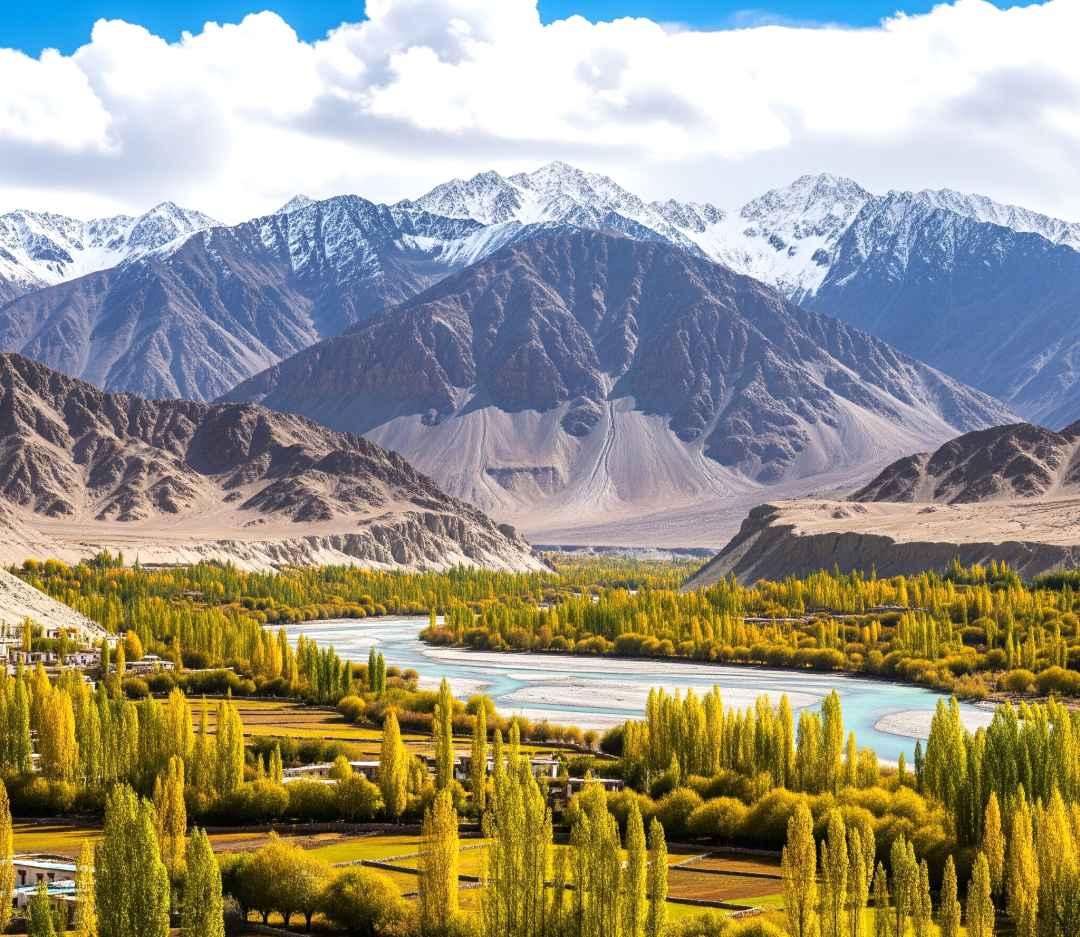
Pangong Lake is famous for its vibrant blues, and September delivers its clearest water conditions. The summer algae blooms disappear, leaving crystalline turquoise reflections.
Prepare for intense cold after 6:00 PM. If staying overnight, choose concrete guesthouses in Tangtse or Lukung with heavy quilts and heating over thin, uninsulated canvas tents.
Kargil in September
Kargil is far more than a highway transit stop. The district administration highlights its historical monuments, peaceful river valleys, and adventure routes. In September, Kargil enjoys mild daytime temperatures (around 22°C to 25°C) and green orchards along the Suru River.
Drass in September
Famous as the second coldest inhabited place in the world during winter, Drass is calm and scenic in September. Stop at the Drass War Memorial situated under the historic ridges of Tololing and Tiger Hill.
Zanskar in September
September is one of the most rewarding months for Zanskar Valley.
Historically, the high passes leading to Zanskar were cut off from November to mid-June. September falls in the prime road-access window. The poplars lining Suru Valley and Padum turn vivid yellow against the snow-dusted twin peaks of Mount Nun (7,135 m) and Kun (7,077 m).
The official Ladakh Tourism calendar lists the annual Zanskar Festival around mid-September (typically September 15–16 at Sani Monastery), featuring monastic dances, folk music, and archery.
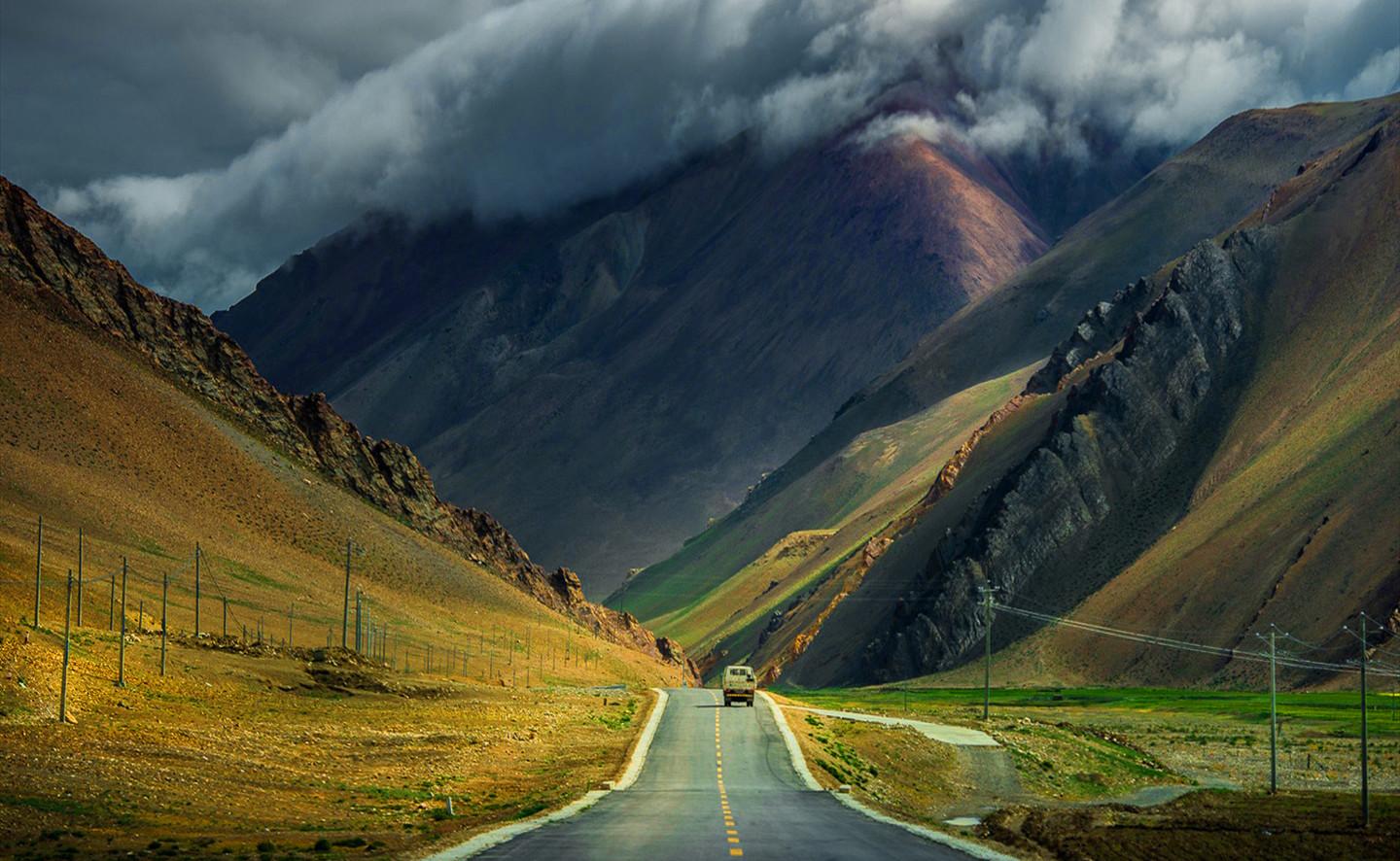
Sham Valley & Turquoise Riverbeds (Sangam, Likir & Alchi)
Sham Valley—stretching west of Leh along the Indus River toward Kargil—sits slightly lower in elevation (3,100 m to 3,300 m), making it an ideal gentle day excursion during your initial acclimatization days.
In September, the confluence of the Indus and Zanskar rivers at Nimmu (Sangam) displays an astounding chromatic contrast: the emerald-turquoise waters of the glacial Zanskar merge with the silt-laden Indus. Poplar groves along the riverbanks glow in bright golden yellow against the sheer granite cliffs.
Along this route, visit Magnetic Hill, the sacred Gurudwara Pathar Sahib maintained by the Indian Army, and the 1,000-year-old UNESCO-recognized monastic complex of Alchi Gompa, home to Kashmir-influenced Buddhist wood carvings and murals that predate Tibetan monastic styles.
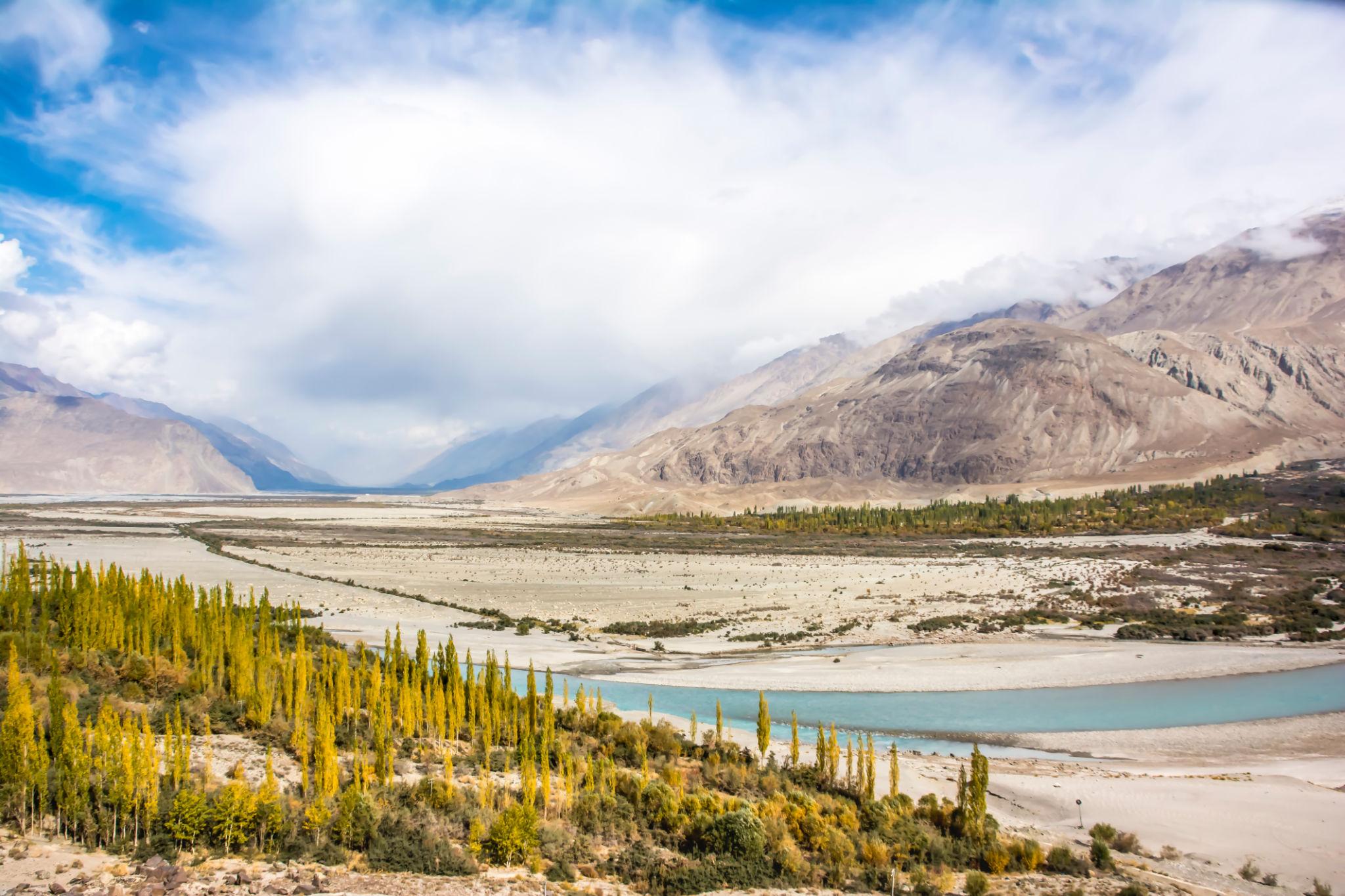
Hanle Dark Sky Reserve & Tso Moriri
For travelers seeking profound isolation, September is the premier window to visit Hanle and Tso Moriri (4,522 m).
Designated as India's first Dark Sky Reserve, Hanle enjoys cloudless September nights with near-zero atmospheric moisture and zero urban light pollution. You can witness the core of the Milky Way arching vividly across the sky with the naked eye. At Tso Moriri, migratory bar-headed geese and black-necked cranes gather along the wetlands of Korzok before commencing their southward winter migration across the Himalayas.
Night Cold Warning: Nights at Tso Moriri drop to −5°C to −8°C even in mid-September. Homestays in Korzok village provide heavy yak-wool blankets and bukhari stoves, but you must wear full thermal base layers inside your sleeping quarters.
What is a practical Ladakh itinerary for September?
Avoid trying to see every corner of the region in a single week. High-altitude travel requires built-in rest periods and buffer days in case mountain passes experience temporary road halts:
Option A: The Classic 8-Day Flight Itinerary (Leh in & Out)
- Day 1 — Arrive in Leh (3,524 m): Check in to your hotel. Complete 24 hours of mandatory bed rest. No local walks or hill climbing.
- Day 2 — Gentle Acclimatization in Leh: Morning rest; late afternoon stroll through Leh Old Town market and sunset at Shanti Stupa.
- Day 3 — Leh to Nubra Valley via Khardung La (5,359 m): Ascend Khardung La. Descend into Diskit, visit Diskit Monastery, and enjoy sunset over the Hunder sand dunes. Overnight in Hunder.
- Day 4 — Nubra Excursion to Turtuk: Day drive along the Shyok River to Turtuk, the northernmost Balti border village. Explore late-season apricot orchards and heritage wooden homes. Overnight in Hunder.
- Day 5 — Nubra to Pangong Lake via Shyok Route: Drive via Agham–Shyok riverbed. Arrive at Pangong by early afternoon. Watch changing blue reflections. Overnight in a solid masonry guesthouse in Tangtse or Lukung.
- Day 6 — Pangong to Leh via Chang La (5,360 m): Dawn photography at the lake. Drive back to Leh over Chang La pass. Evening rest in Leh.
- Day 7 — Cultural Buffer Day: Visit Thiksey and Hemis monasteries. This day acts as an indispensable safety buffer in case Chang La is delayed by pass clearance.
- Day 8 — Departure: Early morning transfer to Kushok Bakula Rimpochee Airport for your outbound flight.
Option B: The 10-Day Overland Expedition (Srinagar → Kargil → Leh → Nubra → Pangong)
- Day 1: Arrive in Srinagar. Evening shikara ride on Dal Lake.
- Day 2: Srinagar to Kargil (204 km) via Sonamarg, crossing Zoji La (3,528 m), and visiting the Drass War Memorial. Overnight in Kargil (2,676 m).
- Day 3: Kargil to Leh (215 km) via Mulbekh Chamba, Namika La (3,700 m), Fotu La (4,108 m), and Lamayuru Moonland. Overnight in Leh.
- Day 4: Complete rest and local exploration in Leh (acclimatization baseline).
- Day 5: Leh to Nubra Valley via Khardung La. Hunder sand dunes camel ride. Overnight in Hunder.
- Day 6: Nubra to Pangong Lake via the direct Shyok Valley route. Overnight in Tangtse / Spangmik.
- Day 7: Pangong sunrise photography. Return to Leh over Chang La pass.
- Day 8: Day excursion into Suru Valley (Sankoo & Panikhar) or Sham Valley (Alchi & Likir).
- Day 9: Buffer shopping day in Leh Main Bazaar for Pashmina shawls, dried apricots, and sea buckthorn tea.
- Day 10: Outbound flight from Leh Airport.
What are the biggest mistakes people make in Ladakh in September?
- Assuming Leh weather represents the entire region: A warm 20°C afternoon in Leh does not prepare you for a −5°C night beside Pangong Lake.
- Rushing acclimatization: Flying straight into Leh and booking Khardung La the next morning frequently results in acute mountain sickness and ruined trips.
- Believing "road open" means trouble-free: Weather changes quickly on 16,000-foot passes; always carry extra warm clothing and emergency snacks in your vehicle.
- Packing only light summer clothing: September sunshine is deceptive; as soon as the sun dips behind the mountain ridge, heavy layers are required.
- Scheduling tight, back-to-back transit days: Leaving zero buffer between returning from Pangong Lake and boarding a flight out of Leh is a recipe for missed flights.
- Expecting running hot water in remote camps: By late September, uninsulated camp pipes freeze overnight. Expect hot water delivered in buckets at dawn.
- Bringing prepaid SIM cards from outside J&K: Non-J&K prepaid numbers are automatically disabled upon landing due to border security regulations; only postpaid SIMs work.
September is Perfect For:
- Landscape photographers wanting amber autumn foliage and cobalt skies.
- Travelers seeking open roads without peak-summer tourist crowds.
- Motorcyclists wanting dry tarmac and low water crossings.
- Road-trippers entering via Srinagar, Drass, and Kargil for stepped acclimatization.
- Astrophotographers heading to Hanle for crystal-clear Milky Way views.
Reconsider September If:
- You expect warm tropical resort weather after sunset.
- You are traveling with infants who struggle in dry, sub-zero nights.
- You are planning a rushed 4- or 5-day trip without acclimatization buffers.
- Your primary travel objective is to photograph heavy winter snowscapes.
What Do Travellers Say About Ladakh in September on Reddit & Forums?
Firsthand discussions across Reddit communities (such as r/ladakh, r/solotravel, and r/indianbikes) and BCMTouring forums offer candid ground perspectives on the realities of traveling through Ladakh in autumn:
- The "Two Seasons in One Day" Phenomenon: Reddit riders frequently recount sweating in a light T-shirt at 1:30 PM on the Diskit sand dunes, only to find themselves wearing thermal innerwear, a fleece mid-layer, and a heavy down parka by 6:00 PM as the valley wind surges. Layering flexibility is unanimously flagged as the number-one packing rule.
- Tangtse Masonry Stays vs. Pangong Lakeside Tents: Travelers on
r/ladakhstrongly advise against staying in uninsulated canvas tents beside Pangong Lake after September 15. Experienced contributors recommend booking masonry guesthouses or hotels in Tangtse (35 km before Pangong), which sit 300 meters lower, feature thick masonry walls that block wind, and provide electric blankets or hot-water radiators. - Baralacha La Morning Black Ice Warnings: Motorcyclists who rode the Manali–Leh highway in late September caution against pre-8:30 AM starts from Sarchu or Jispa. Several riders documented minor skids on Zingzingbar switchbacks caused by thin, invisible sheets of black ice that only soften once the morning sun clears the eastern ridge.
- Unanimous Praise for Autumn Landscape Clarity: Across all forums, September is heralded as visually superior to peak summer. With monsoon dust washed away from the foothills and zero haze over the high plateau, photographers report unmatched clarity for capturing mountain reflections, golden poplar groves, and the deep cobalt waters of Pangong Tso.
Local Note: Use traveler discussions for practical packing nuance, but always verify live highway statuses with official district bulletins and Border Roads Organisation advisories.
Frequently Asked Questions About Ladakh in September
Is Ladakh open in September?
What is the temperature in Ladakh in September?
Does it snow in Ladakh in September?
Can you travel from Srinagar to Leh in September?
Is the Manali to Leh road open in September?
Is September good for a Ladakh bike trip?
What clothes should I wear in Ladakh in September?
Is Pangong Lake worth visiting in September?
Is acclimatization required when visiting Ladakh in September?
What is special about Zanskar in September?
Information Sources & Official References
- Administration of Union Territory of Ladakh: Official tourism guidelines, seasonal experience classifications, and acclimatization advisories (ladakh.nic.in).
- District Administration Leh: Official road operating seasons, highway distances, and travel preparedness notes (leh.nic.in).
- District Administration Kargil: Regional climatic profiles, Suru Valley and Zanskar tourism guidance (kargil.nic.in).
- Border Roads Organisation (BRO): Project Beacon & Project Vijayak pass maintenance updates for Zoji La, Khardung La, Chang La, and NH-1.
- Ladakh Tourism Official Calendar: Cultural festival listings and dates for Zanskar Festival.
Community Questions & Ground Field Notes
10 Discussion NotesAsk a Ground Question or Share a Field Note
Planning your September Ladakh expedition? Post your question below and get direct advice from local practitioners.