Ground Memorial Log • Drass Valley Under Tololing
- Introduction
- Kargil Vijay Diwas Drass 2026
- Kargil Vijay Diwas 2026 Date
- Why is Kargil Vijay Diwas Celebrated?
- Key Reasons
- History of Kargil Vijay Diwas
- Operation Vijay Explained
- Key Facts About Operation Vijay
- Heroes of the Kargil War
- Kargil War Memorial, Drass
- Famous Quotes
- Kargil Vijay Diwas Wishes
- FAQs
- Traveler Q&A & Tributes
- Conclusion
Every year on 26 July, India proudly observes Kargil Vijay Diwas to commemorate the historic victory of the Indian Armed Forces in the 1999 Kargil War. In 2026, the nation celebrates the 27th anniversary of this remarkable victory by paying tribute to the brave soldiers who made the ultimate sacrifice during Operation Vijay to protect the country's sovereignty.
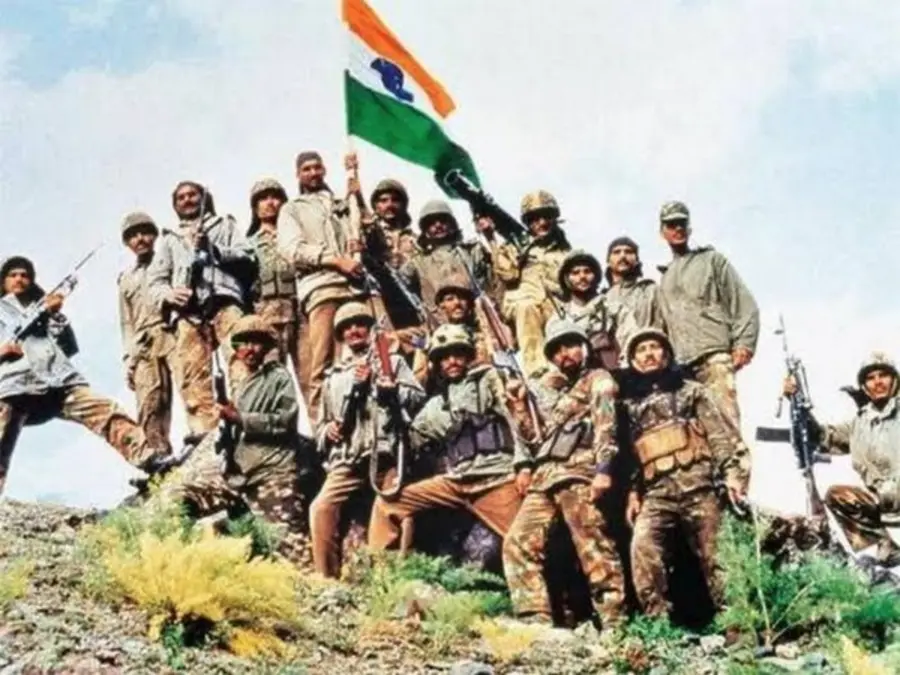
Whether you are a student, a competitive exam aspirant, a history enthusiast, or a traveler planning to visit the Kargil War Memorial in Drass, this comprehensive guide provides everything you need to know about Kargil Vijay Diwas 2026, including its history, significance, celebrations, important dates, famous heroes, and travel information for visiting the memorial.
🔗 Explore More on KargilLadakh.in:
📝 Blog 📅 Ladakh Itinerary 🛣 Live Road Status 🏔 Suru Valley Guide 🏞 Pangong LakeKargil Vijay Diwas Drass 2026
Although Kargil Vijay Diwas is celebrated across India through patriotic events, school programs, military ceremonies, and cultural activities, the main national celebration takes place at the Kargil War Memorial in Drass, Ladakh. Drass, often referred to as the "Gateway to Ladakh", is one of the most historically significant locations because many of the decisive battles of the 1999 Kargil War, including those at Tiger Hill, Tololing, Point 4875, and other strategic peaks, were fought in this region.
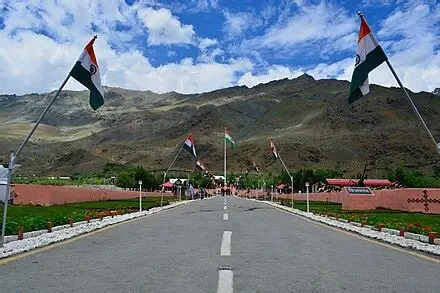
Every year, thousands of people gather at the Drass War Memorial to honor the courage and sacrifice of India's brave soldiers. The ceremony is attended by senior officers of the Indian Army, Indian Air Force, and Indian Navy, along with veterans, families of the martyrs, and dignitaries from across the country. Depending on the official schedule, the event may also be attended by the President of India, the Prime Minister, the Defence Minister, the Chief of Defence Staff (CDS), and other senior government officials.
The commemorative program includes wreath-laying ceremonies, military band performances, patriotic tributes, exhibitions showcasing the history of the Kargil War, and cultural performances by artists representing different states and union territories of India.
The vibrant cultural programs, traditional dances, patriotic songs, and exhibitions celebrating India's rich diversity make the event even more memorable, symbolizing the unity of the nation while honoring the heroes who defended it under some of the harshest battlefield conditions in the world.
Kargil Vijay Diwas is much more than a military commemoration. It is a powerful reminder of courage, sacrifice, patriotism, and the unwavering determination of Indian soldiers who fought at altitudes exceeding 16,000 feet in the rugged mountains of Ladakh.
Kargil Vijay Diwas 2026 Date
Why is Kargil Vijay Diwas Celebrated?
Kargil Vijay Diwas is celebrated every year on 26 July to commemorate India's victory in the 1999 Kargil War and to honor the courage, sacrifice, and patriotism of the brave soldiers who laid down their lives during Operation Vijay.
During the Kargil War, Pakistani Army personnel and armed infiltrators occupied several strategic mountain peaks on the Indian side of the Line of Control (LoC) in the Drass, Kargil, Batalik, and Mushkoh sectors of Ladakh. These positions included important heights such as Tiger Hill, Tololing, Point 4875, Point 5140, and other strategic peaks, giving the enemy a tactical advantage over National Highway 1 (NH-1), the vital road connecting Srinagar to Leh.
The Indian Armed Forces launched Operation Vijay to recapture these occupied positions. After nearly two months of intense fighting in extreme weather conditions and at altitudes of over 16,000 feet, Indian soldiers successfully regained control of all the occupied territories. On 26 July 1999, India officially declared victory, and this day has been observed every year as Kargil Vijay Diwas.
The day serves as a tribute to the 527 Indian soldiers who made the supreme sacrifice and the many others who were injured while defending the nation's sovereignty. It reminds every Indian of the courage, determination, and selfless service of the armed forces and inspires future generations to uphold the values of patriotism and national unity.
Key Reasons Why Kargil Vijay Diwas is Celebrated
History of Kargil Vijay Diwas
The history of Kargil Vijay Diwas is closely linked to the 1999 Kargil War, one of the most significant military conflicts in modern Indian history. The war took place in the rugged mountains of Kargil district, Ladakh, particularly in the Drass, Batalik, Kaksar, and Mushkoh Valley sectors along the Line of Control (LoC).
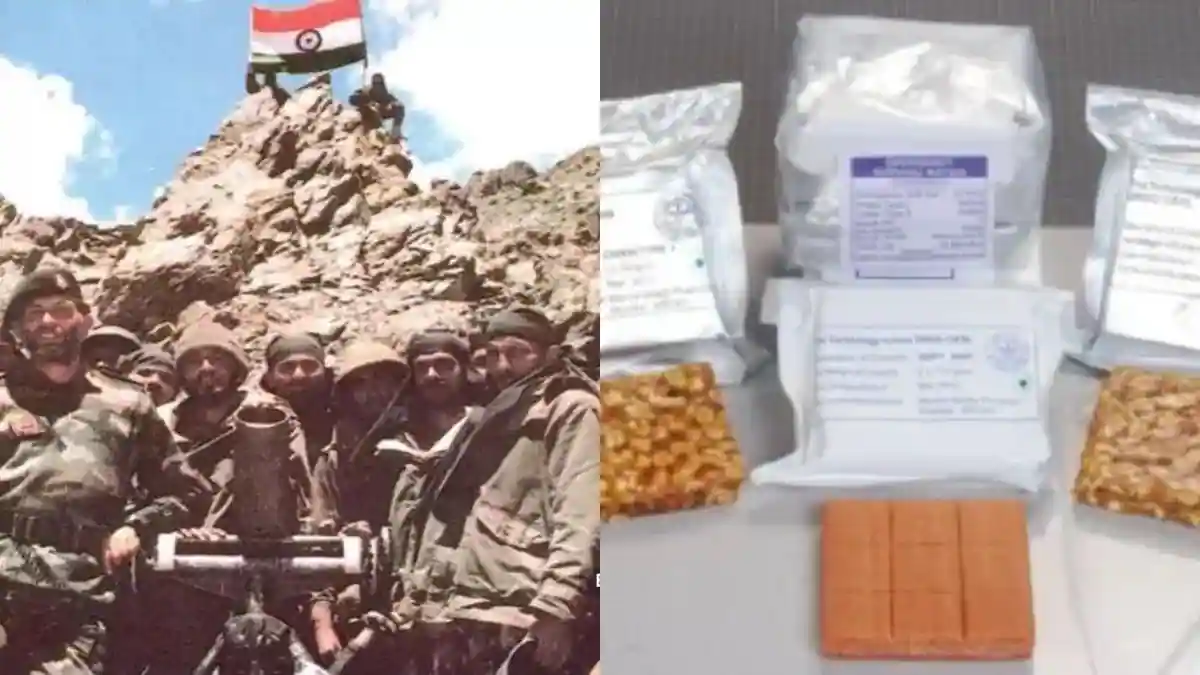
During the winter of 1998–99, many of the high-altitude posts along the LoC were temporarily vacated due to extremely harsh weather and heavy snowfall. Taking advantage of this situation, Pakistani Army personnel, supported by armed infiltrators, secretly crossed the Line of Control and occupied several strategic mountain peaks on the Indian side. Their objective was to dominate National Highway 1 (NH-1), the vital road connecting Srinagar and Leh, disrupt Indian military logistics, and alter the situation along the LoC.
The intrusion was first reported in early May 1999 when Tashi Namgyal, a local shepherd from the Batalik region of Kargil, noticed suspicious armed men in the mountains while grazing his livestock. He immediately informed the nearest Indian Army post, leading to the discovery of the large-scale infiltration.

This intelligence prompted the Indian Armed Forces to launch Operation Vijay, while the Indian Air Force initiated Operation Safed Sagar to support ground operations.
The fighting continued for nearly two months, with fierce battles fought at extremely high altitudes, often above 16,000 feet. Indian soldiers displayed extraordinary courage while recapturing strategic positions such as Tololing, Tiger Hill, Point 5140, Point 4875, and several other key peaks. Despite difficult terrain, freezing temperatures, and enemy forces positioned at higher elevations, the Indian Army successfully regained control of all occupied positions.
Among the many heroes of the conflict, Captain Vikram Batra, PVC, became a symbol of bravery after leading the capture of Point 5140 and later fighting heroically during the battle for Point 4875, where he made the supreme sacrifice. His famous radio message, "Yeh Dil Maange More!", became one of the defining slogans of the Kargil War and continues to inspire generations of Indians.
On 26 July 1999, India officially declared victory after successfully evicting the intruders from the occupied territories. Since then, 26 July has been observed every year as Kargil Vijay Diwas, honoring the bravery, sacrifice, and dedication of the Indian Armed Forces and remembering the 527 Indian soldiers who laid down their lives in defense of the nation.
Operation Vijay Explained
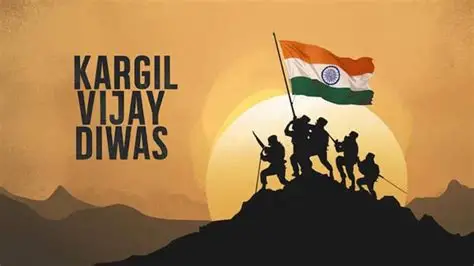
Operation Vijay was the codename given to the Indian Armed Forces' military campaign to evict Pakistani Army personnel and infiltrators who had occupied strategic positions on the Indian side of the Line of Control (LoC) during the 1999 Kargil War. Launched in May 1999, it became one of India's largest and most challenging military operations since the 1971 Indo-Pakistan War.
The mission was led primarily by the Indian Army, with crucial support from the Indian Air Force through Operation Safed Sagar. Indian soldiers fought in some of the world's toughest battlefield conditions, scaling steep mountains at altitudes ranging from 16,000 to over 18,000 feet while facing enemy fire from higher positions.
After nearly two months of fierce fighting, the Indian Armed Forces successfully recaptured all major strategic peaks, including Tiger Hill, Tololing, Point 5140, Point 4875, and several other important positions in the Drass, Batalik, Kaksar, and Mushkoh sectors. The operation concluded successfully on 26 July 1999, restoring Indian control over the occupied territory and securing the vital Srinagar–Leh National Highway (NH-1).
Operation Vijay is remembered as a remarkable example of courage, determination, and military excellence, showcasing the bravery of Indian soldiers who fought under extreme weather conditions and difficult terrain.
Key Facts About Operation Vijay
| Detail | Information |
|---|---|
| Operation Name | Operation Vijay |
| Launched | May 1999 |
| Victory Declared | 26 July 1999 |
| Location | Drass, Kargil, Batalik, Kaksar, and Mushkoh Valley, Ladakh |
| Objective | Evict Pakistani Army personnel and infiltrators from Indian territory |
| Indian Air Force Operation | Operation Safed Sagar |
| Troops Mobilized | More than 200,000 Indian troops deployed |
| Altitude of Battles | Between 16,000 and 18,000+ feet |
| Major Peaks Recaptured | Tiger Hill, Tololing, Point 5140, Point 4875, and several others |
| Result | Complete restoration of Indian control — Decisive victory for India |
Operation Vijay remains one of the most successful military operations in India's history and is commemorated every year on Kargil Vijay Diwas (26 July) as a tribute to the courage and sacrifice of the Indian Armed Forces.
Heroes of the Kargil War
Many soldiers displayed exceptional bravery during the conflict. Among the most remembered are:
Their stories continue to inspire millions of Indians.
Kargil War Memorial, Drass
The Kargil War Memorial at Drass is the main venue for Kargil Vijay Diwas celebrations. The memorial is a solemn tribute to the Indian soldiers who laid down their lives during the 1999 Kargil War.
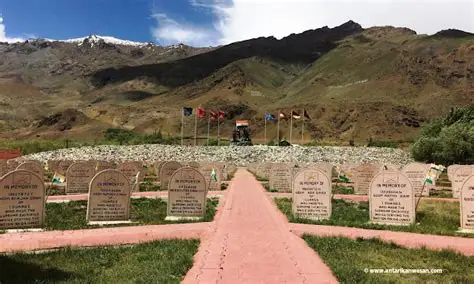
The Memorial Features
Thousands of visitors, veterans, military personnel, and families gather every year to pay homage.
The memorial is located directly along NH-1 (Srinagar–Leh Highway), approximately 5 km before Drass town and 56 km from Kargil. Entry is free with a valid Government ID required at the entrance gate. If traveling during the July 24–26 commemorative week, book your stay in advance in Kargil or Drass — explore our verified Hotels in Kargil Guide and check real-time Zoji La Pass & NH-1 Road Status before your transit.
Famous Kargil Vijay Diwas Quotes
“Either I will come back after hoisting the Tricolour, or I will come back wrapped in it.”
“Our flag does not fly because the wind moves it. It flies with the last breath of every soldier who died protecting it.”
“Salute the brave hearts who gave their today for our tomorrow.”
“Yeh Dil Maange More!” — Captain Vikram Batra
Kargil Vijay Diwas Wishes
Happy Kargil Vijay Diwas! Let us salute the brave heroes of our nation.
Remembering the courage and sacrifice of every soldier who defended India.
Jai Hind! Respect and gratitude to our armed forces.
Frequently Asked Questions (FAQs)
1. When is Kargil Vijay Diwas celebrated?
2. Why is Kargil Vijay Diwas celebrated?
3. What is Operation Vijay?
4. Who are the famous heroes of the Kargil War?
5. Where is the Kargil War Memorial located?
6. How many Indian soldiers were martyred in the Kargil War?
7. What is the significance of 26 July in Indian history?
8. Can I visit the Kargil War Memorial at Drass?
Conclusion
Kargil Vijay Diwas 2026 is more than an anniversary—it is a solemn reminder of the courage and sacrifice of India's armed forces. As the nation commemorates the 27th anniversary of the victory, citizens across India honor the heroes who defended the country's sovereignty under some of the harshest battlefield conditions.
Their legacy continues to inspire future generations with values of patriotism, dedication, and selfless service.
Jai Hind! 🇮🇳
💬 Traveler Q&A & Memorial Discussions (4)
Have questions about visiting the Drass War Memorial, July 26 commemoration access, photography rules, or route conditions? Ask below and get direct advice from Kargil native Zulkarnain.
Leave a Tribute or Ask a Question